EN

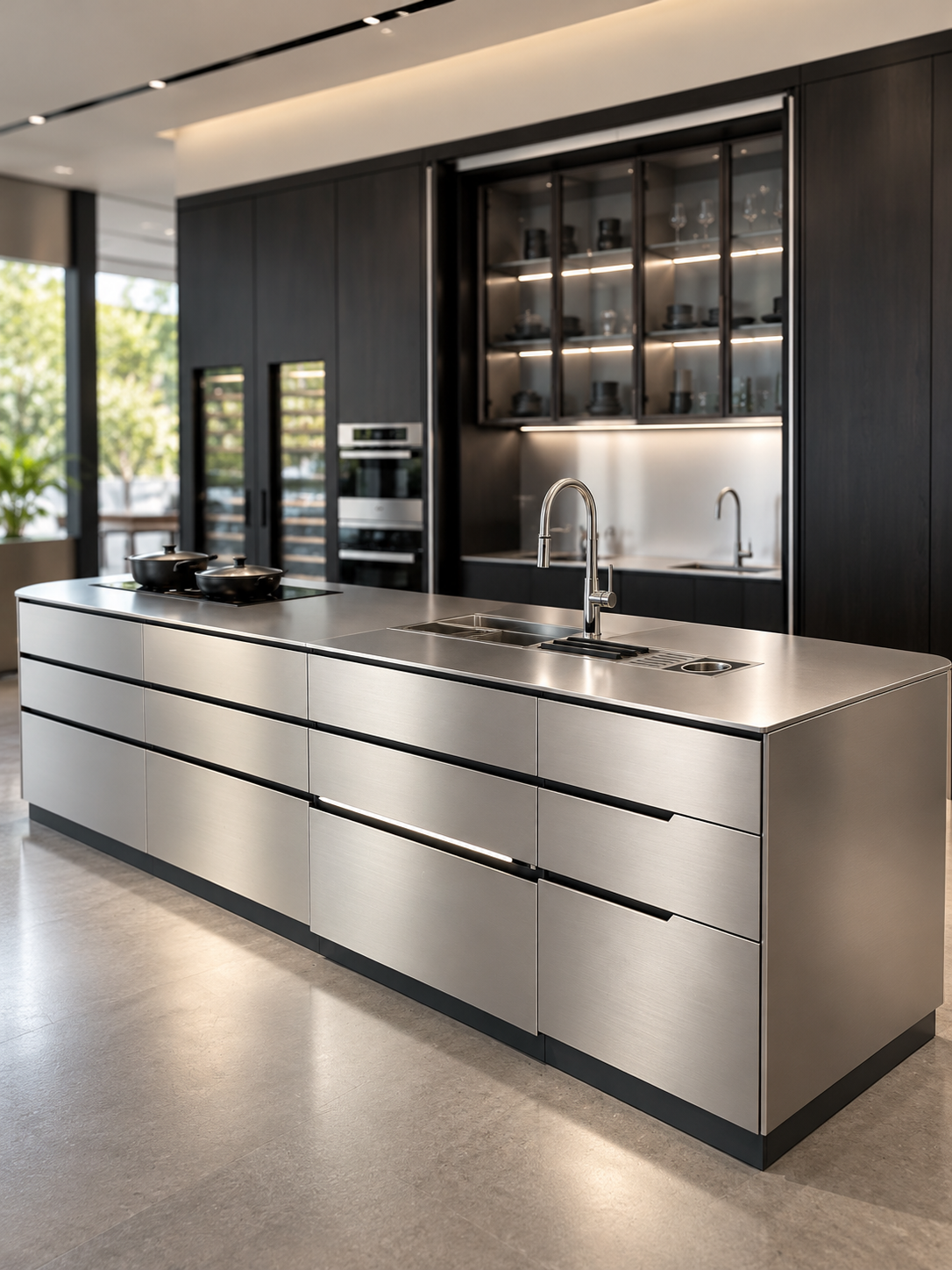
For an indoor kitchen in a humid climate, stainless steel kitchen cabinets are worth considering around the sink and wherever splashes are frequent. Wood-based cabinets remain an option for drier storage areas when the board type, finish and sealed edges are suitable for the conditions. Choose the material for each part of the kitchen based on how much moisture it will face.
When comparing stainless steel vs wood kitchen cabinets, start by marking the sink, dishwasher and steam-producing appliances on the plan. Then compare the cabinet bodies, fronts and worktops separately. A kitchen can have a warm wood-grain appearance while using stainless steel cabinet bodies underneath.
Start with where the water comes from
Humid air, splashes and a leaking pipe create different problems. A pantry cupboard away from plumbing does not face the same exposure as a sink cabinet with openings for pipes and plumbing connections. Even in the same room, the details that need protection will vary.
Before choosing materials, check whether water collects around the sink, whether appliance steam reaches nearby fronts, and whether there is dampness on the wall behind the cabinets. Fix leaks and investigate persistent dampness before installation. Changing the cabinet material will not remove those sources of moisture.
This article concerns indoor kitchens. A terrace exposed to rain or salt spray needs a separate assessment; our guide to stainless steel outdoor kitchen specifications covers that situation.
Stainless steel vs wood kitchen cabinets and the materials behind the finish
“Wood kitchen cabinets” can mean solid wood, plywood, MDF or particleboard, often combined with a separate decorative finish. These materials respond differently to moisture. Laminate or veneer describes a surface layer; it does not tell you the material of the cabinet box, also called the carcass.
For wood-based cabinets, ask which type of board is used in the sides, back, shelves and doors. Check how edges and plumbing cut-outs are protected. A moisture-resistant rating applies to the board; it does not mean the finished cabinet is waterproof or can withstand a persistent leak.
The same attention is needed for stainless steel kitchen cabinets. The steel may form the cabinet body, an outer layer bonded to a core, the worktop, or several of these parts. A stainless steel worktop alone does not tell you what the cabinets beneath it are made of. Ask for a materials list or a cross-section drawing before comparing prices.
Stainless steel itself does not absorb water and swell like wood-based materials can. That is a meaningful advantage in areas exposed to repeated wetting. The assembled cabinet still includes joints, hardware and possibly other materials, so its suitability depends on more than the visible metal surface.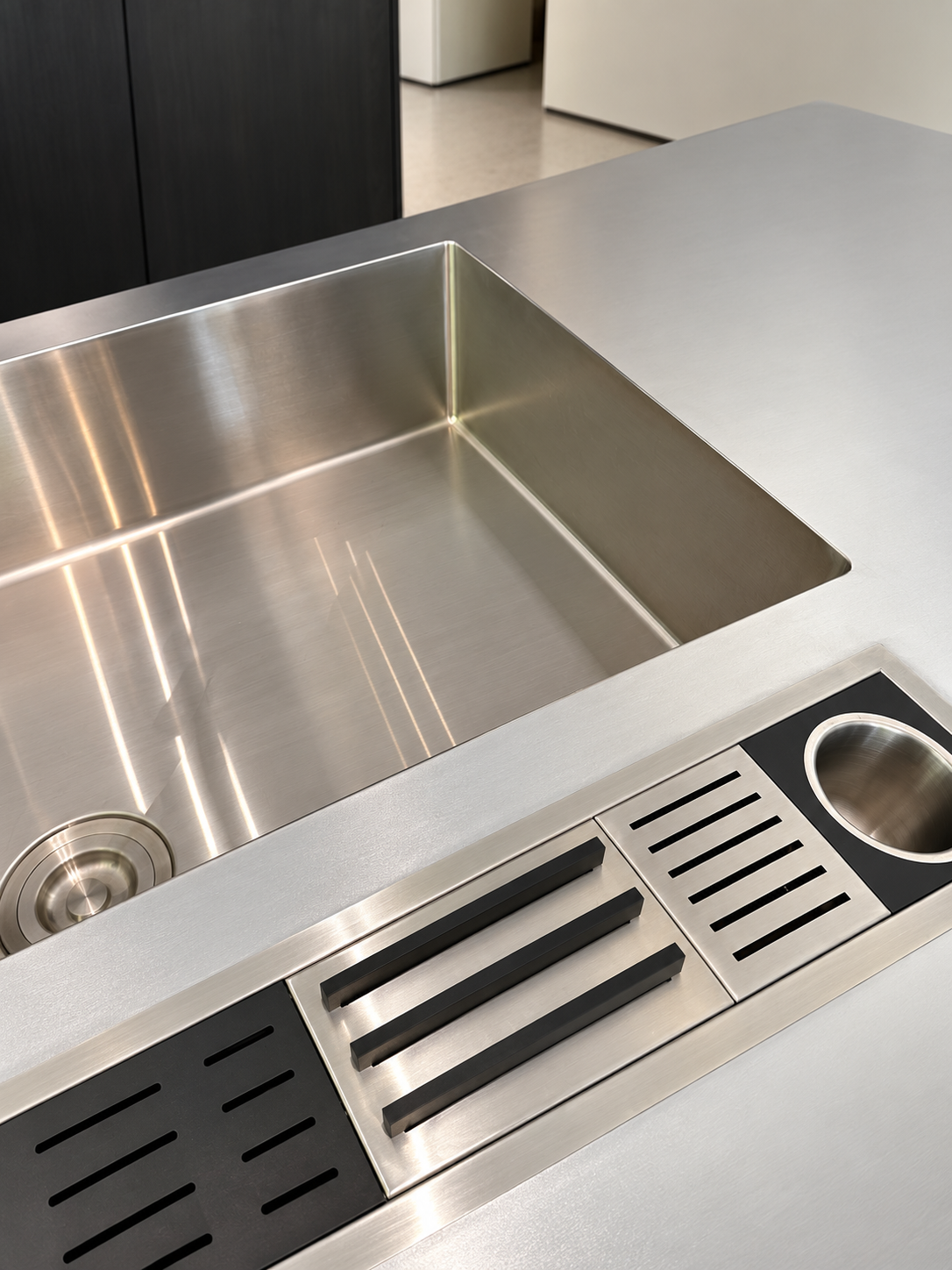
Choosing kitchen cabinets for humid climates by location
Use the layout to decide where moisture resistance should take priority and where appearance, cost and repair options deserve more weight.
Cabinet position |
Material decision |
Detail that can change the choice |
Sink base and areas with frequent splashes |
Consider stainless steel kitchen cabinets, checking the body as well as the surface. |
Check the base, sink connection, pipe openings and access to valves. |
Beside a dishwasher or steam appliance |
Assess the actual appliance installation before selecting the surrounding construction. |
Steam outlets, ventilation and adjacent panel protection depend on the model. |
Dry preparation and pantry storage |
Consider wood-based cabinets alongside steel, especially where finish choice and budget matter. |
Confirm board type, edge treatment and the expected cleaning routine. |
Wall cabinets and tall units |
Choose after checking their surroundings; height alone does not make a cabinet dry. |
Appliance steam and a damp backing wall can affect these positions too. |
Sink cabinets need more than a moisture-resistant surface
If your budget is limited, consider prioritising moisture-resistant materials for the sink cabinet. If a wood-based option is proposed here, look closely at the board specification and the treatment of every exposed edge and cut-out. For a steel cabinet, check the internal construction and whether a plumbing leak would be easy to spot and clean up.
In either case, retain access to the trap, valves and connections. A cabinet that is difficult to inspect makes routine plumbing maintenance harder, regardless of its material.
Follow appliance installation requirements
An oven, dishwasher or steam oven can change the requirements for adjacent panels. Give your cabinet supplier the appliance model and installation instructions so they can plan the openings, ventilation and protection for adjacent panels. Do not assume that a metal cabinet removes the need for specified clearances or steam protection.
Wood kitchen cabinets offer more finish options for dry storage
Away from recurring water contact, wood-based cabinetry offers finishes and door designs that may suit your preferred style and budget. Ask for the proposed board and finish combination, rather than treating every wooden cabinet as equivalent.
If steel is selected for the sink run and wood-based cabinets elsewhere, review the junctions between them: front alignment, plinth height, worktop support and finish matching. Compare samples of the visible finishes side by side. Check these details before ordering so the cabinets fit together and the finishes work well alongside each other.
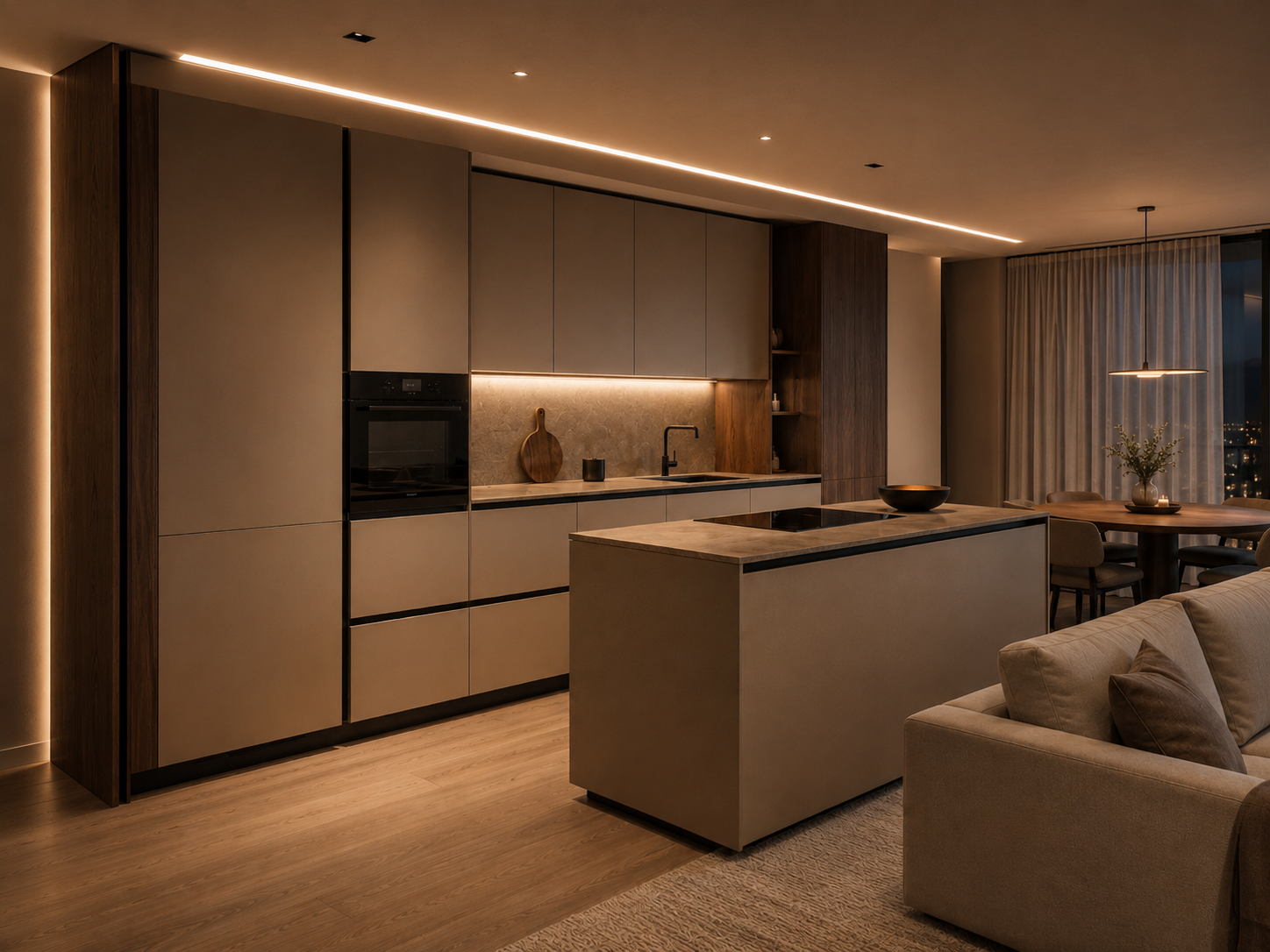
Stainless steel kitchen cabinets can have wood-grain finishes
You can choose warm wood tones without choosing a wooden cabinet body. Some cabinet systems combine wood-grain fronts with a metal structure, so ask about the materials behind the finish.
For example, Sunrise's stainless steel kitchen cabinets with a sink island and dark tall units pair a brushed metal island with dark wood-finish tall cabinetry. The featured specification describes stainless steel carcasses with aluminium honeycomb construction for the tall units. The wood-grain finish does not mean these cabinets have wooden bodies.
This provides another route for a residential kitchen: select the visible colour and texture you want, then confirm the construction behind it. Whether you choose that approach or a combination of steel and wood-based cabinets, inspect physical finish samples before finalising your choices.
Account for maintenance as well as moisture
Stainless steel kitchen cabinets have their own everyday trade-offs. Fingerprints, water marks and fine scratches can be visible, depending on the finish and lighting. The Australian Stainless Steel Development Association's indoor cleaning guidance recommends regular cleaning, rinsing and drying, and warns about aggressive scrubbing and prolonged contact with salts or acids.
Ask for care instructions for the exact finish supplied. Guidance for exposed brushed steel may not apply to a painted or coated front. Wood kitchen cabinets also need care suited to their surface finish, including prompt spill removal and attention to damaged edges. Both materials need regular care.
Comparing quotes for stainless steel vs wood kitchen cabinets
When comparing kitchen cabinets for humid climates, ask each supplier to price the same layout and identify the construction of each cabinet group. “Stainless steel kitchen” and “moisture-resistant wood kitchen” leave too much unspecified on their own.
Ask the supplier to state |
What the answer should clarify |
Materials by component |
Carcass, fronts, back panels, drawer bottoms, cores and worktop, including any exceptions. |
Steel grade and thickness |
Which parts use the named grade; steel sheet thickness separately from total composite-panel thickness. Request corresponding material documentation when grade is a contractual requirement. |
Wood-based board specification |
Board type and grade, surface finish, and treatment of edges and site-cut openings. |
Sink and plumbing details |
Worktop-to-sink connection, cut-outs, base construction and access for maintenance. |
Hardware and finish samples |
Hinge and runner models, support components, visible finishes and applicable care instructions. |
What the quote includes |
Worktop, sink, appliances, delivery, installation and warranty scope, with exclusions identified. |
Compare the total cost for the same materials, fittings and services. A lower cabinet price may exclude a worktop, use different hardware or leave installation to another contractor. For both stainless steel and wood kitchen cabinets, ask whether a damaged part can be replaced individually and what information is needed to reorder it.
To discuss a Sunrise kitchen, send your measured plan with the sink and appliance positions marked, along with your preferred finishes, approximate budget and delivery location. Include photographs of the existing room if available. Use the enquiry form on the sink island kitchen product page to start the discussion, and ask the supplier to list the materials and included items for each group of cabinets.