 EN
EN

A custom wine cabinet should do more than store bottles. It can work as a wine cabinet fridge, a clear display cabinet and a piece of the room’s interior architecture. The most useful design decision is to settle the storage purpose, bottle mix and cooling requirements before choosing the final finish. For a buyer, the question is not simply whether a custom wine cabinet looks attractive; it is whether the wine cabinet fridge, glass wine cabinet and interior layout work together.
This guide is for designers, contractors, distributors and owners planning a built-in or freestanding custom wine cabinet.
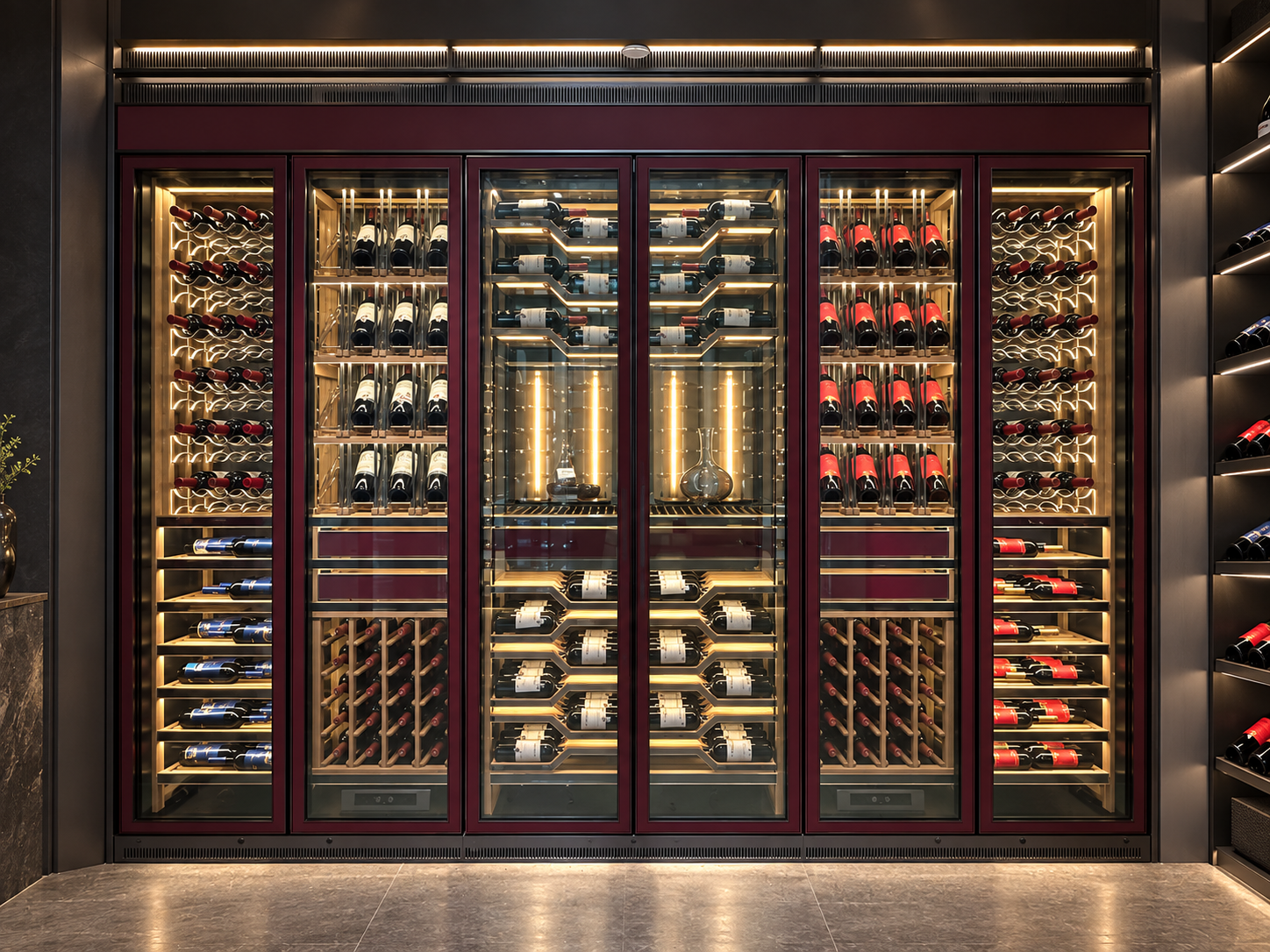
Start With the Storage Brief
Decide what the cabinet must do before discussing appearance:
Question |
Why it matters |
Is it mainly storage, serving access or display? |
Display shelves reduce density; reserve storage needs different rack spacing. |
Which bottle formats will be stored? |
Burgundy, Champagne and large-format bottles do not fit the same layout. |
Does the project need one temperature zone or several? |
Different wines may require different setpoints; multiple doors alone do not create separate zones. |
Will it be used as a fridge during service? |
Frequent door opening affects recovery, access and cooling load. |
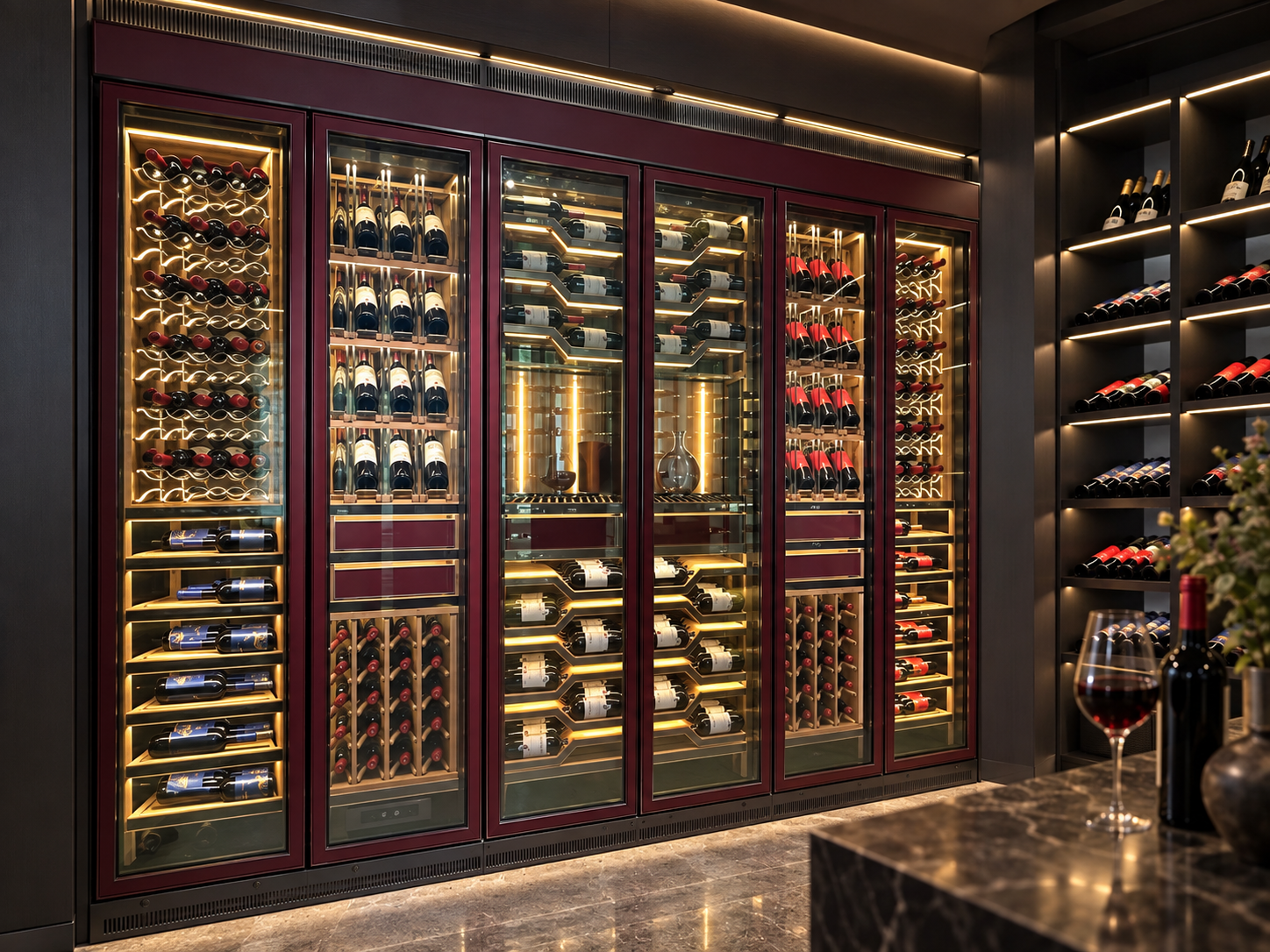
The cabinet can be planned around the actual collection instead of a generic bottle count. Wave racks, horizontal shelves, cubbies, drawers and label-forward displays can be combined, but the final capacity depends on the chosen mix. A custom wine cabinet can therefore be arranged for daily serving, reserve storage or a balanced display. The wine cabinet fridge should be discussed with the bottle schedule, not added after the racks are drawn.
Treat Cooling as Part of the Cabinet
The cabinet can be designed as a temperature-controlled wine cabinet fridge with project-selected cooling features. Depending on the approved configuration, Sunrise can coordinate a 50 mm cyclopentane polyurethane foam layer, Embraco compressor, all-copper evaporator, embedded heating pipework, fan-assisted frost-free cooling and a dual-duct air path with top return and rear supply. This gives a custom wine cabinet a clear functional role in the room: it is a storage appliance, but it can also support presentation and service.
These are available technical directions, not a promise that every cabinet uses the complete package. The final specification should state the number of zones, setpoints, air return and discharge route, insulation, condensate provisions, local electrical requirements and service access. Any temperature target, including a stated vertical difference within 2°C for a referenced dual-duct design, must be tied to the final cabinet size, room conditions, loading and test method.
Glass area, sunlight, lighting and door-opening frequency affect the heat load. For a glass-front cabinet, equipment selection should be checked against the completed enclosure rather than cabinet width alone. A glass wine cabinet is especially sensitive to the relationship between visible glass, room temperature and opening frequency, so the wine cabinet fridge specification should follow the finished design.
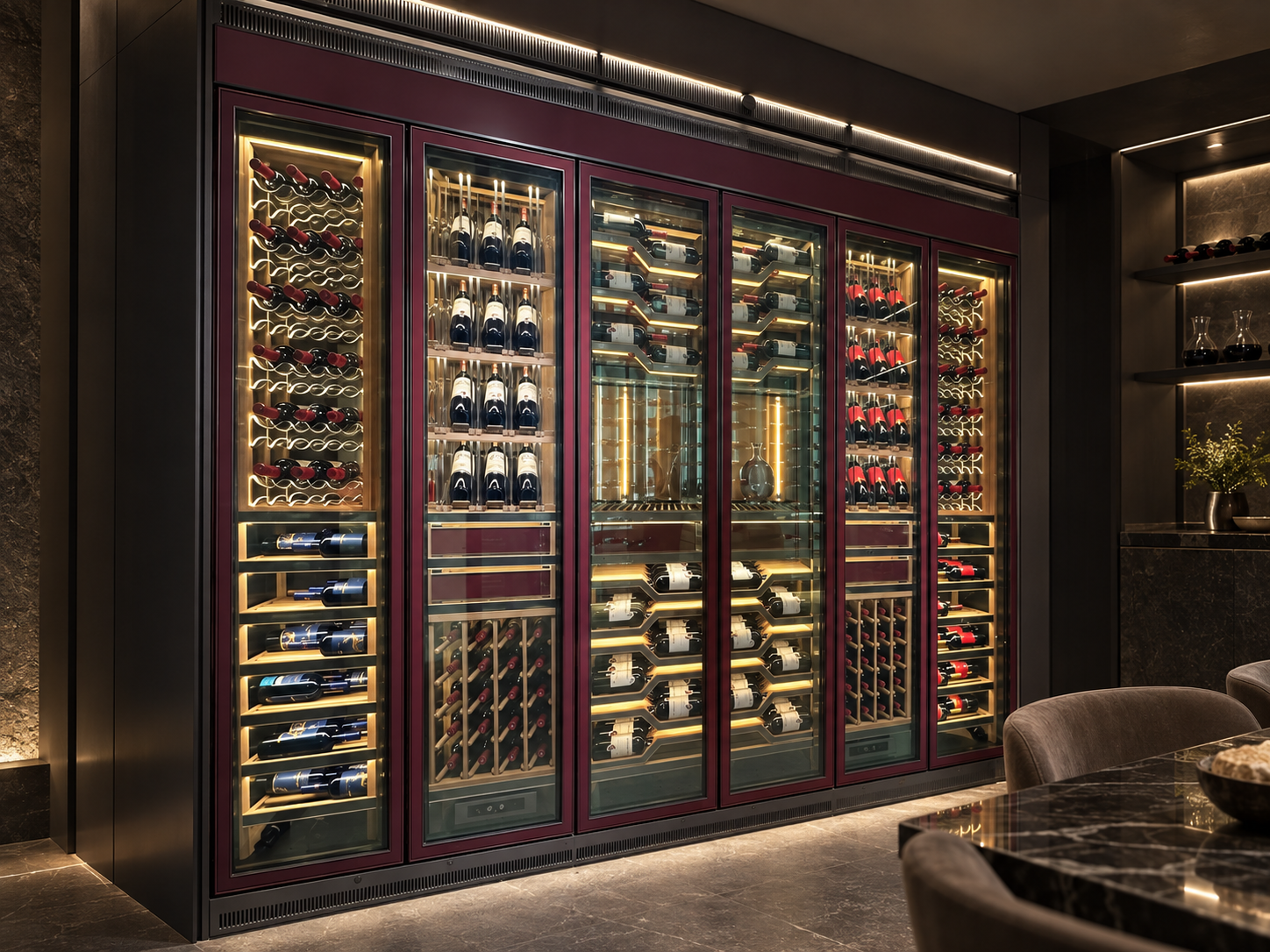
Match the Finish to the Room
The frame can be made from 304 stainless steel. It can receive different painted colors or a wood-grain finish, allowing the cabinet to work with the home’s wider interior style rather than looking like a separate appliance.
The front glass provides immediate visibility of the collection and supports display use. The final glass, door frame, seals and hardware still need to be specified together, especially where condensation, frequent opening or long-term adjustment matters. For a glass wine cabinet, the front is part of the product experience, but it is also part of the thermal boundary. The wine cabinet fridge should not be selected from the glass appearance alone.
Inside, the project can use solid American oak or Acrylic. These materials support different visual directions, and the internal display can be shaped with wave racks, shelves, cubbies or other approved forms. The right choice depends on bottle formats, access frequency, lighting and the desired balance between storage density and presentation. In a custom wine cabinet, the interior is not a filler detail: it determines how easily bottles can be read, removed and returned. A glass wine cabinet may use open-looking shelves for display, while a denser wine cabinet fridge layout may use more horizontal positions for reserve stock.
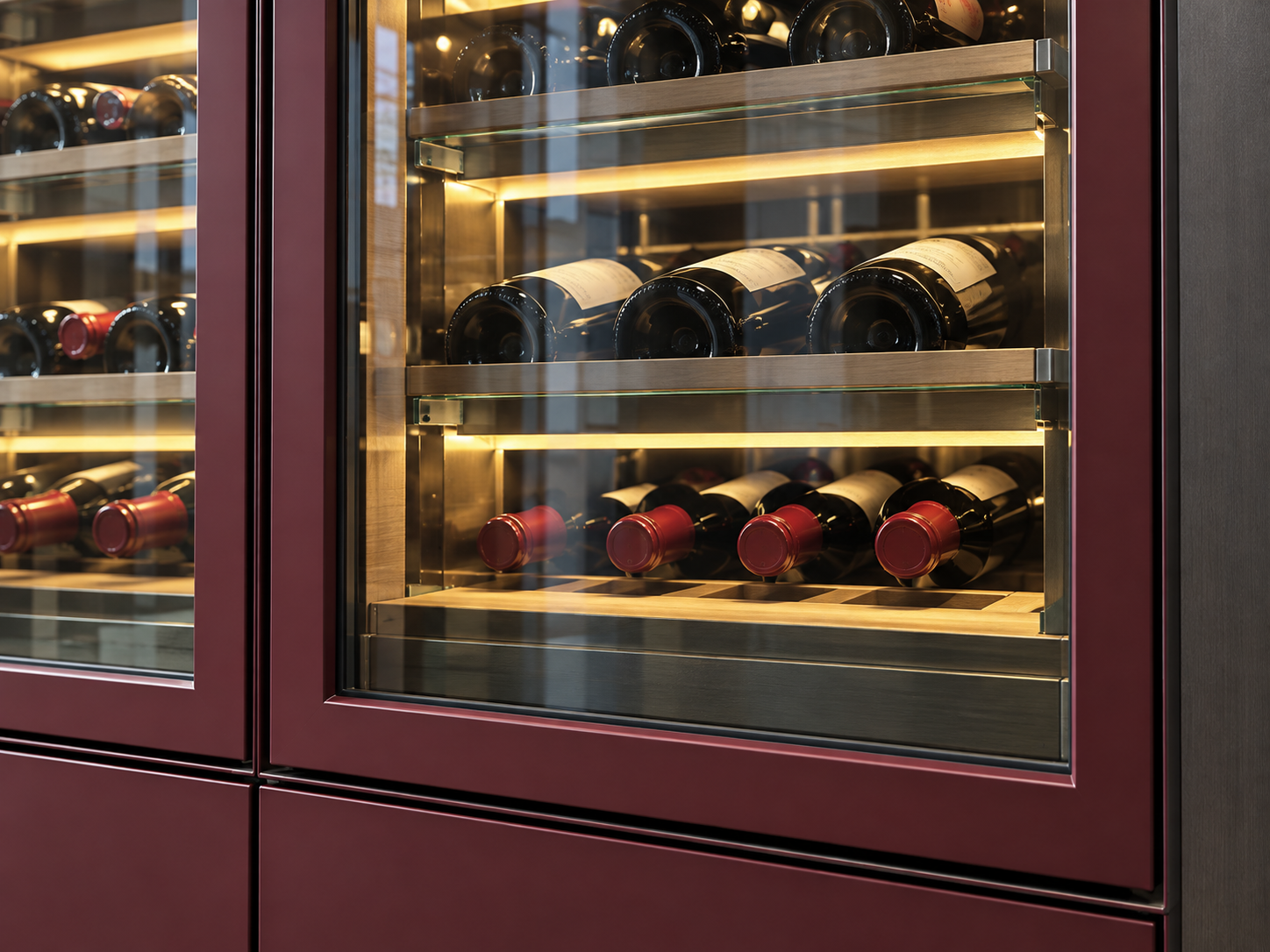
Customize the Cabinet Around the Project
Width, height, color, finish, interior material and display style can be customized. A common depth range is 350-550 mm, but the final depth must allow for bottle orientation, insulation, cooling components, door construction and the available opening. This is where custom wine cabinet planning is more useful than choosing a standard appliance: the cabinet can be sized around the room, the collection and the intended service pattern.
There is no MOQ requirement for this custom direction. That makes the custom wine cabinet suitable for a single residence, a hospitality project or a repeat program with different room layouts. For a reliable quotation, send the intended use, bottle formats, target capacity, cabinet dimensions or drawings, local voltage, finish direction and preferred interior arrangement. Those inputs allow the wine cabinet fridge, glass wine cabinet and custom wine cabinet layout to be priced against the same brief.
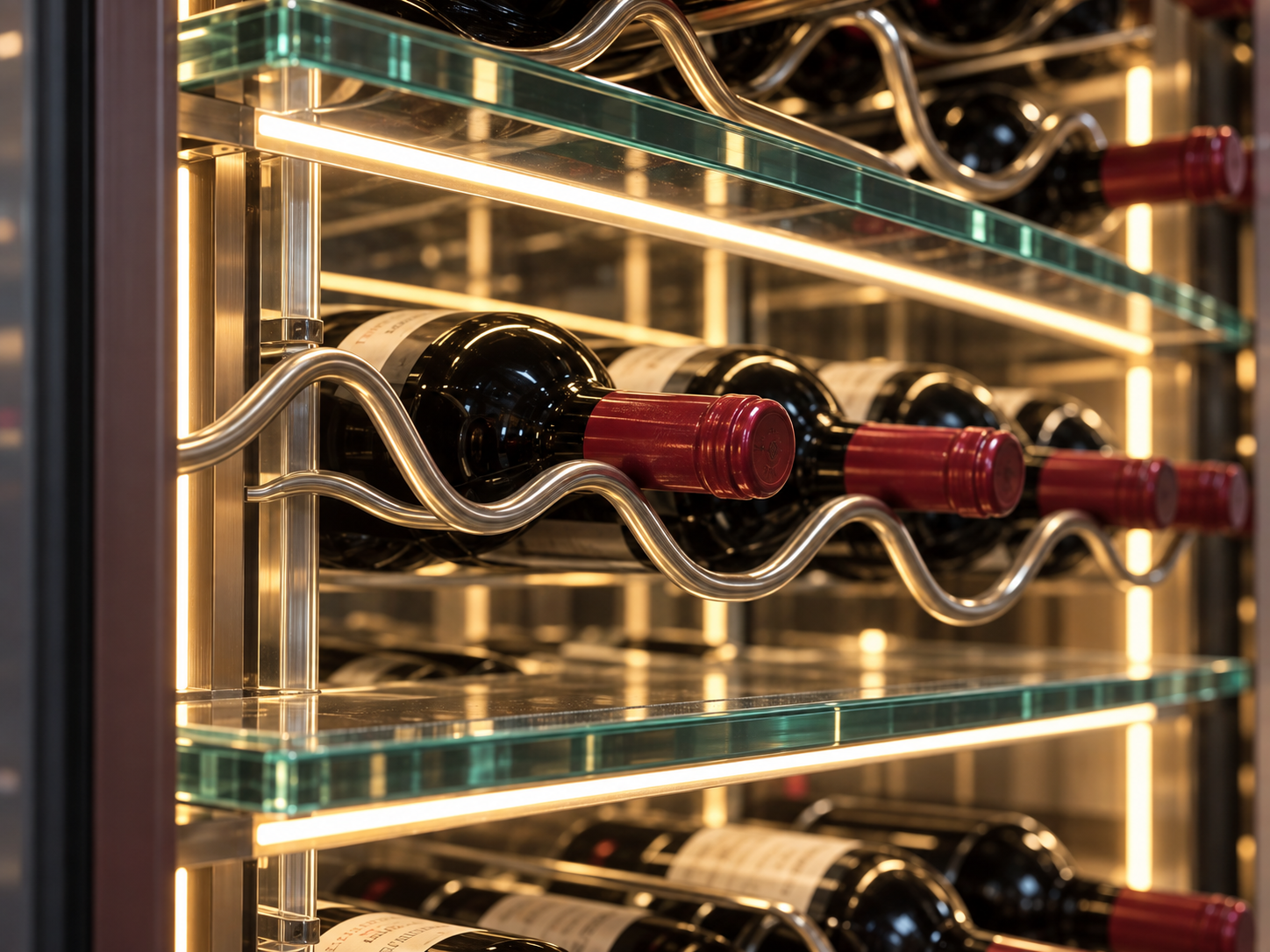
The final drawing should show door lines, rack types, ventilation openings, lighting, service access and module joints. A custom wine cabinet that looks right in elevation but cannot reject heat or be serviced is not a finished design. The wine cabinet fridge, glass wine cabinet and storage layout should be reviewed as one cabinet before production. This final review keeps the custom wine cabinet practical after installation, not only attractive in a rendering.
For related product information, review the Sunrise stainless steel wine cabinet. For a broader storage overview, see Wine Cabinet Mastery: How to Choose the Ultimate Storage for Your Collection. To discuss a one-off or repeat project, use the contact page. A custom wine cabinet brief should state how the wine cabinet fridge and glass wine cabinet will be used, displayed and serviced. This keeps the custom wine cabinet and wine cabinet fridge aligned with the actual room and collection.