 EN

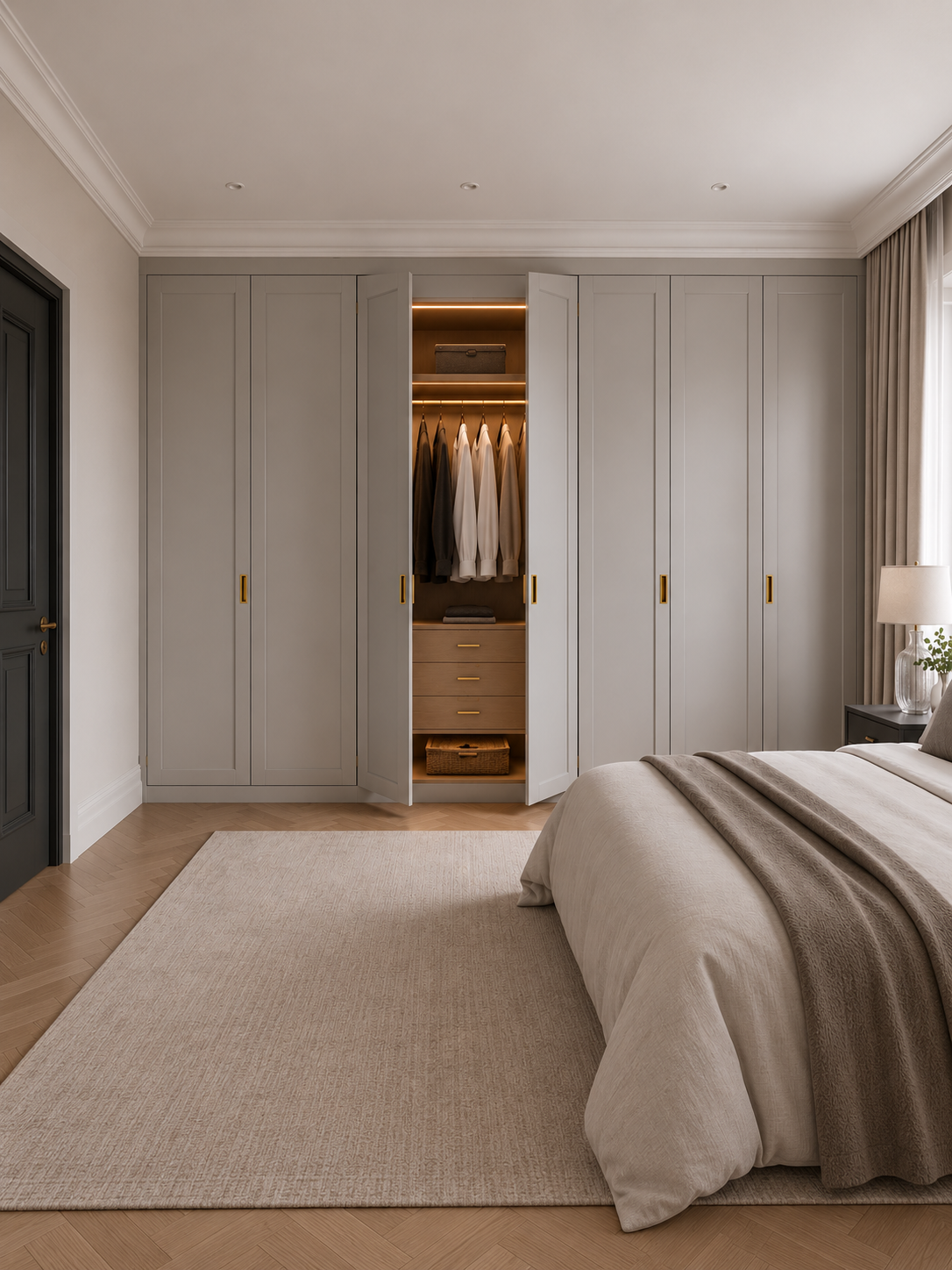
Should cabinets match throughout the house? They do not have to. Cabinets visible from the same spot benefit from a clear visual connection, while you have more flexibility with cabinetry in a separate bedroom. A consistent look can work well, but different cabinet colors can also feel at home together.
If you're planning whole house customization, first decide which details to repeat. Start with rooms you can see together, then choose cabinet finishes for each space.
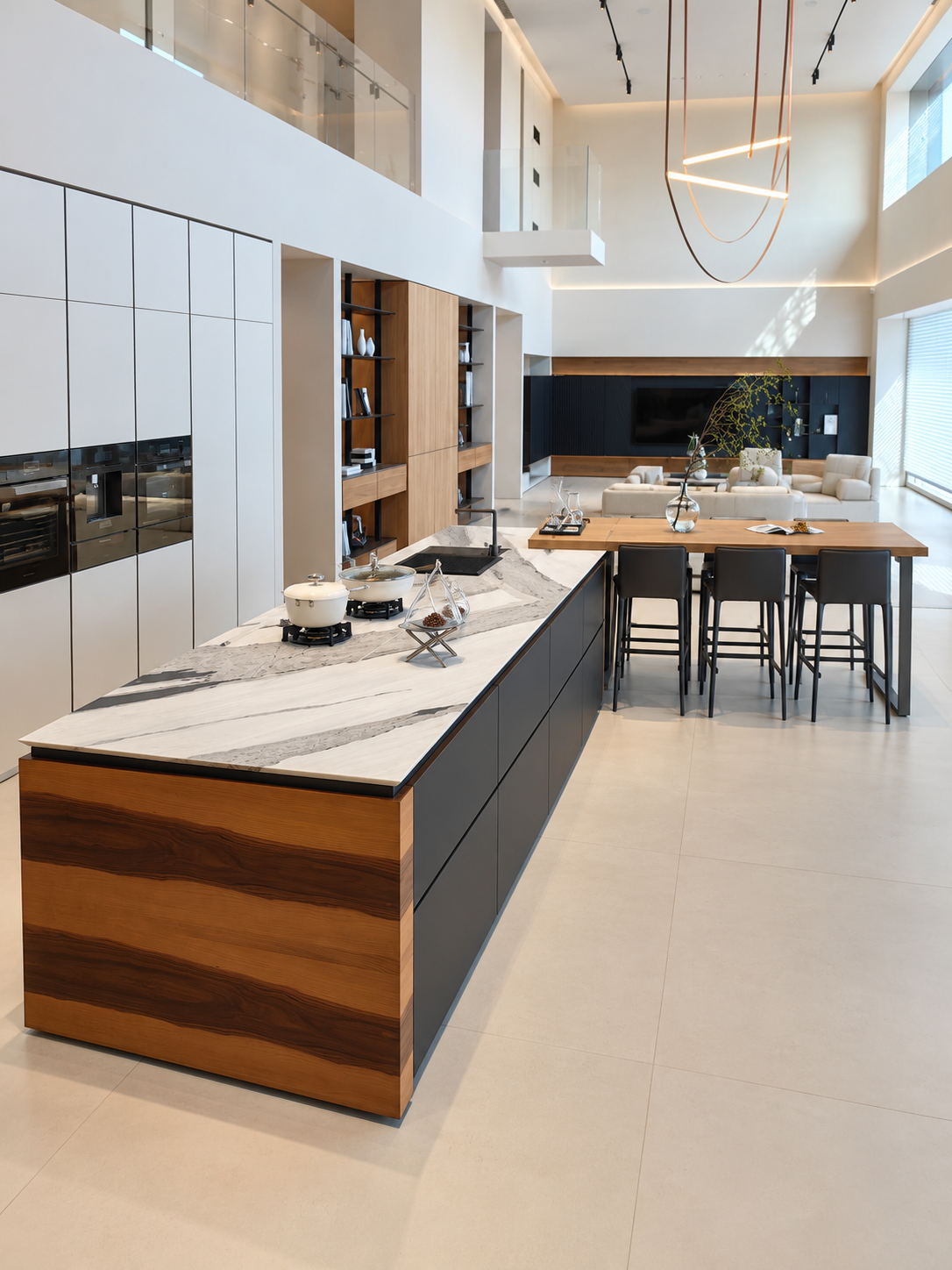
Start with the view from the next room
Stand at the entrance, sit at the dining table, and look toward the kitchen. Which cabinets can you see at the same time? Cabinet colors that look appealing in individual reference photographs may feel disconnected when placed side by side.
For an open kitchen and dining area, repeating a door profile or a finish can give the eye something familiar to follow. If the kitchen already has strong wood grain, a dining sideboard with a subtler finish can balance it.
At doorways, check where cabinet finishes meet skirting, flooring, or an interior door. A small visible end panel can affect the transition as much as the main doors. Choose cabinet colors with these fixed surfaces in view, especially when they will remain after the renovation.
Decide what repeats and what changes
Cabinet colors are only part of the connection. Door profile, visible grain, sheen, and handles also contribute. When comparing cabinet finishes, separate the color you see from the texture and reflection of the surface. Two similar shades can still look quite different if one is glossy and the other is matte.
There are several workable starting points:
Keep the cabinet colors consistent and vary the storage layout. This suits adjoining areas where you want a quiet background, although repeating a dark tone across large surfaces may feel heavier than expected.
Repeat the door profile while changing cabinet colors. This connects the rooms while allowing each to have its own character.
Carry one of the cabinet finishes into a smaller feature elsewhere. A wood-look kitchen island, for example, could relate to a dining sideboard while surrounding doors remain neutral. Test the combination with samples before deciding.
Whole house customization does not require contrast in every room. Matching cabinet colors also need not mean identical construction. In a bathroom, check that the materials and surfaces suit the moisture levels and cleaning products they will encounter.
How to coordinate cabinets in different rooms
Use the most connected space as your starting point. Once its cabinet colors are settled, review the adjoining rooms before moving to private areas.
Here is one possible scheme to adapt to your home.
Space |
Detail to carry through |
Change to consider |
Open kitchen and dining area |
Repeat a door profile and one of the cabinet finishes |
Give the sideboard a different internal layout for tableware |
Living room visible from the kitchen |
Relate cabinet colors to an existing wood tone or neutral |
Reduce visible grain if the room already has patterned upholstery |
Separate bedroom |
Keep a familiar handle shape if desired |
Choose cabinet colors around the bedroom floor and the view from the bed |
Separate bathroom |
Echo a color or small metal detail |
Choose cabinet finishes and construction suited to the bathroom's moisture levels and cleaning routine |
Check the view with bedroom doors open, too. If a wardrobe is visible from the living room, compare its sample with the living room cabinet finishes.
Check the samples in your own light
Place samples of the proposed cabinet finishes beside the actual floor, wall, and door surfaces. Hold them in the position they will occupy, then look again in daylight and with the evening lights on. Homecrest's finish selection advice also recommends viewing the finalists at home at different times of day.
Compare cabinet colors together, not on separate screens. An almost-matching white can be more distracting than a deliberate contrast when the samples are adjacent. If the difference bothers you, choose one shared sample or make the contrast clearer. Neither choice is a universal rule; the test is whether the combination looks intentional to you.
For wood-look cabinet finishes, inspect grain scale and direction as well as tone. A small chip may not show how a pattern will read across a tall wardrobe. Ask for a larger representative sample or a door sample when that distinction matters. Check sheen from an angle too, because a straight-on photograph can hide reflections.
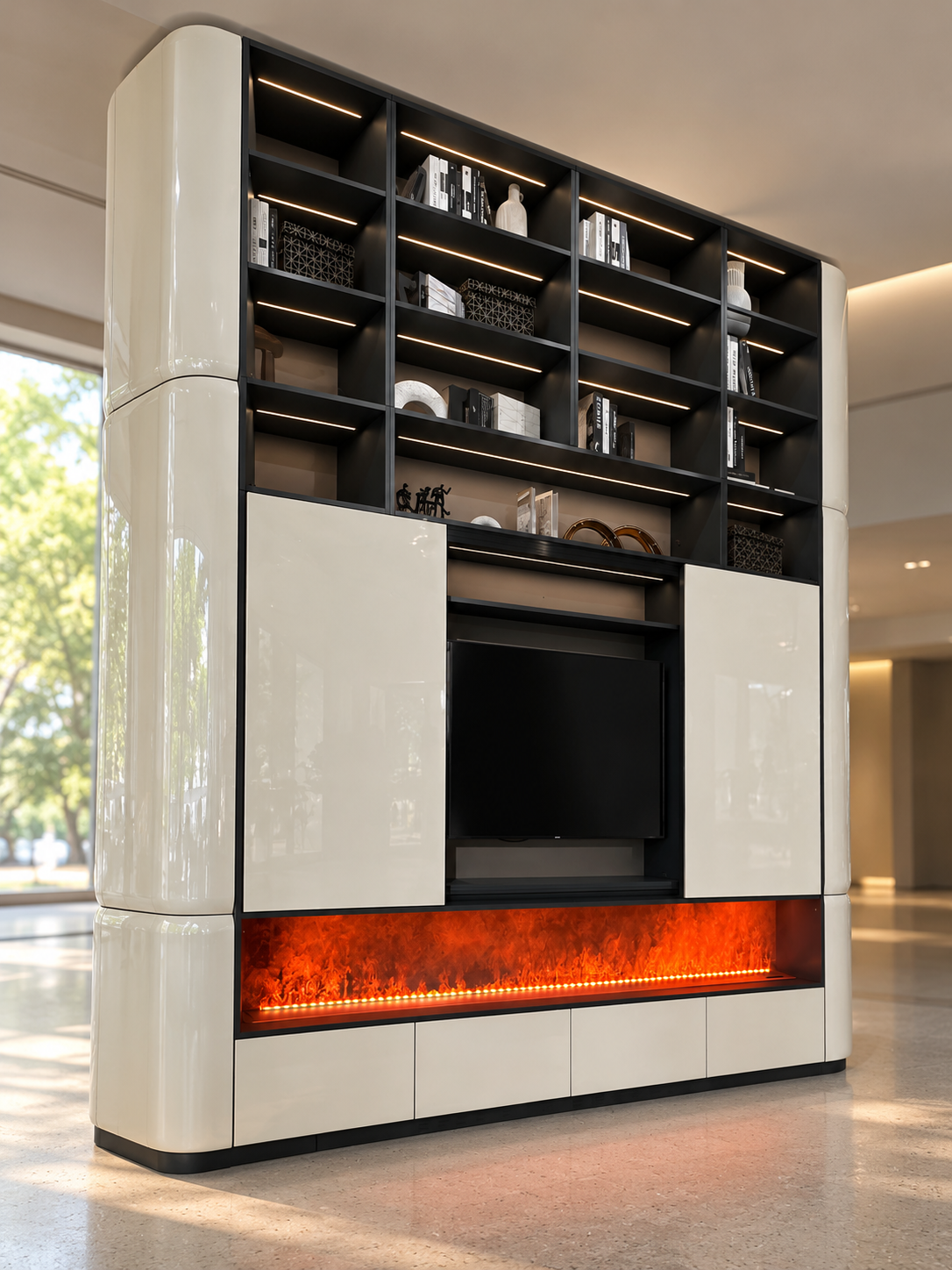
Turn your choices into a clear project brief
Record your preferred cabinet colors and cabinet finishes by room, with a sample reference for each. Note which surfaces should match, which should contrast, and which existing elements must stay. Include visible end panels so that the plan covers what you will see from adjoining spaces.
Explore Sunrise Furnishing's whole house customization range, then use the enquiry form on that page to share your floor plan, connected-room photographs, and preferred combinations. These give the discussion a clearer starting point for checking available options. Once the appearance is settled, our ordering and installation planning guide covers the next stage.