 EN
EN

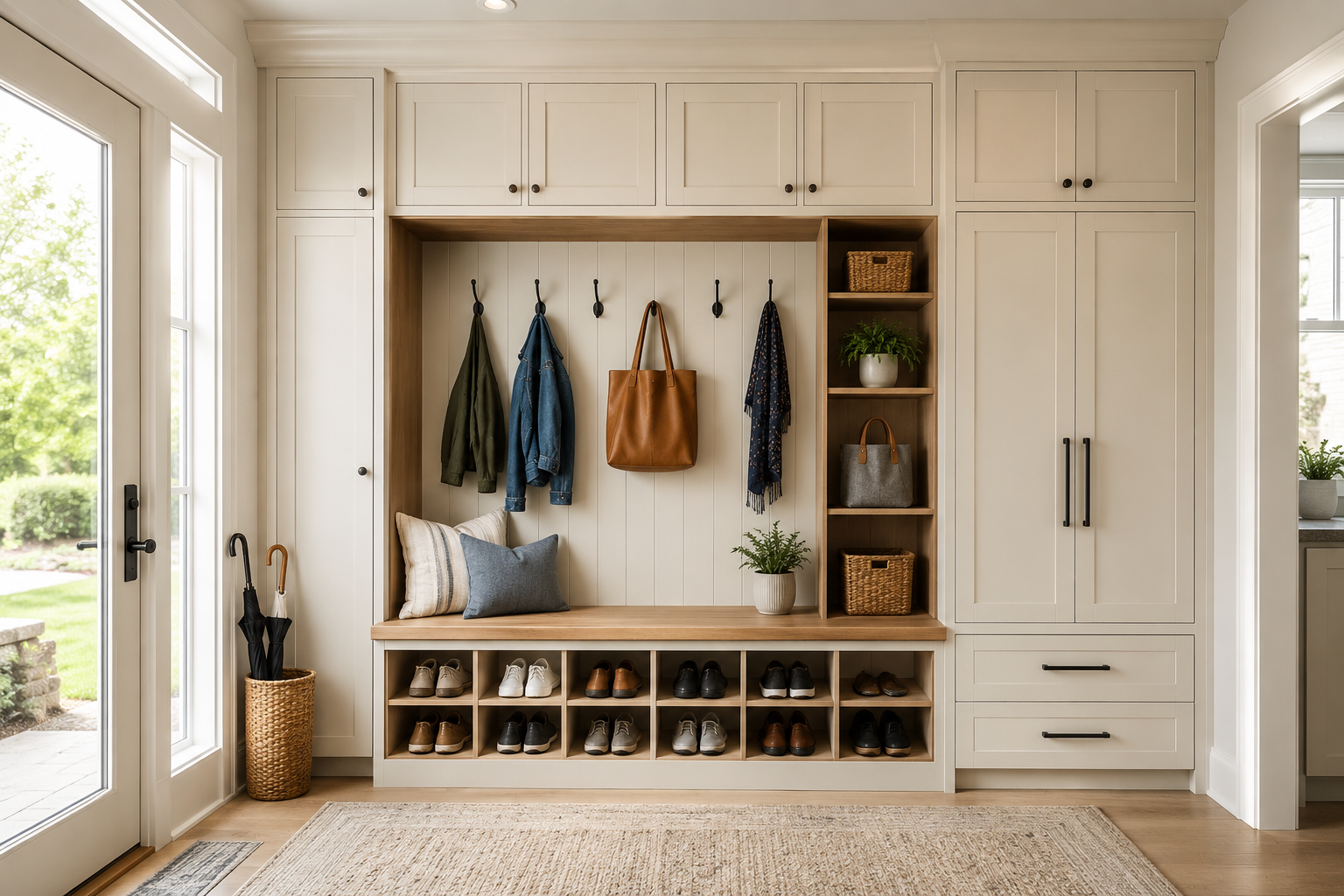
A custom mudroom entrance cabinet for family homes is designed to solve one of the most common problems in daily living: the entry area becomes messy before the rest of the home does. Shoes collect near the door, coats are placed on chairs, bags land on the floor, and small items such as keys, umbrellas, pet leashes, and school accessories often have no fixed place.
A good mudroom entrance cabinet is not only a shoe cabinet. It is a practical transition zone between outdoor activity and indoor living. For a busy family home, it can help separate clean and dirty areas, organize everyday items, and make leaving or entering the house smoother.
What Is a Mudroom Entrance Cabinet?
A mudroom entrance cabinet is a built-in or fitted storage system placed near an entry point of the home. This may be the main entrance, a back door, a side entrance, or a garage entry. Its purpose is to organize items used when moving between outdoor and indoor spaces.
Unlike a simple entryway cabinet, a mudroom cabinet usually handles more categories of storage. It may include shoe compartments, bench seating, coat hooks, open cubbies, tall cabinets, drawers, utility storage, and space for bags, umbrellas, pet items, or children’s school supplies.
In a family home, the mudroom often becomes a practical “drop zone.” It is where people remove shoes, hang jackets, store bags, and keep daily items ready for the next trip outside.
How It Differs from a Standard Entryway Cabinet
A standard entryway cabinet may focus mainly on appearance or basic shoe storage. It may include a console, a small shoe rack, or a decorative cabinet near the front door.
A mudroom entrance cabinet is more functional. It is usually planned around daily routines: where shoes are removed, where wet coats hang, where school bags go, and how the family moves through the entry space. This makes the cabinet more connected to lifestyle and traffic flow.
Why Family Homes Need More Than Shoe Storage
In many family homes, the entrance does not only hold shoes. It also handles sports gear, backpacks, seasonal coats, rainwear, dog walking items, reusable shopping bags, and sometimes cleaning supplies. If the cabinet only has shelves for shoes, the space can still feel cluttered.
A practical mudroom cabinet should give each type of item a clear place. This is the main difference between “having storage” and “having storage that works every day.”
What Should a Family Mudroom Cabinet Include?
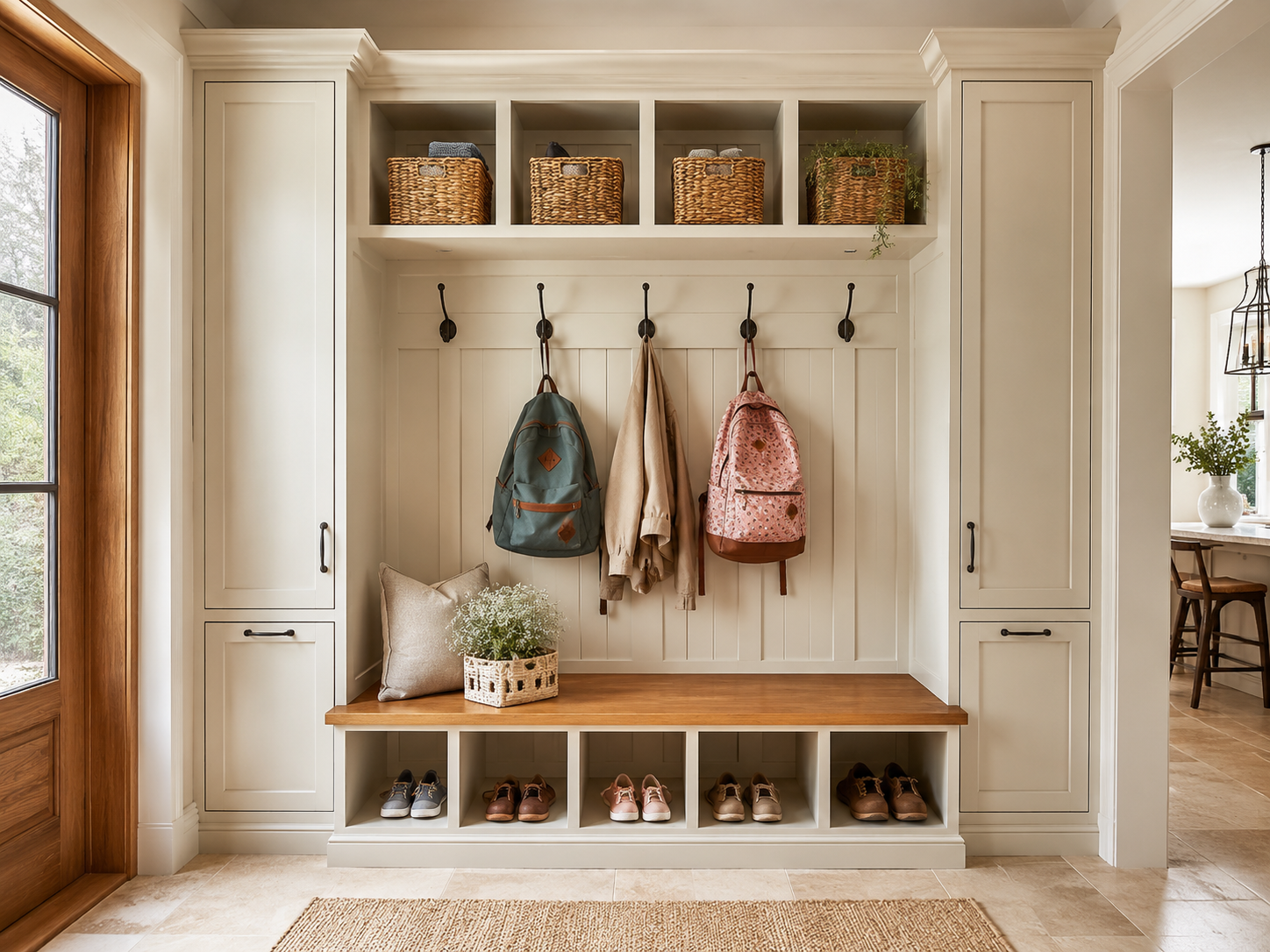
A family mudroom cabinet works best when it is divided into clear zones. Each zone should support a specific part of the entry routine.
Shoe Storage for Daily and Seasonal Footwear
Shoe storage is usually the foundation of a mudroom entrance cabinet. For daily use, open lower shelves or ventilated compartments can make shoes easier to access. For less frequently used shoes, closed cabinets or upper compartments can keep the area visually cleaner.
When planning shoe storage, it is helpful to think about how many people use the entry every day, whether shoes are stored daily or seasonally, and whether boots, sports shoes, or children’s shoes need separate space. It is also important to consider whether the shoes are often wet, dusty, or used for outdoor activities.
Ventilation is worth planning early. Fully closed shoe compartments may look clean, but they can trap odor if there is no airflow. A better design may use small gaps, slatted doors, open shelves, or reserved ventilation details depending on the cabinet style.
Bench Seating for Changing Shoes
A bench makes the mudroom more comfortable, especially for children, older family members, or anyone who needs to sit while changing shoes. It also gives the entry area a clear “pause point” instead of forcing people to balance awkwardly near the door.
A bench does not need to be oversized, but it should feel stable and practical. In a narrow hallway, it may be designed as a slim built-in seat. In a larger foyer or garage entry, it can be wider and combined with drawers or shoe storage underneath.
The bench surface should be easy to clean because it may come into contact with bags, coats, outdoor clothing, or damp items.
Hooks and Open Cubbies for Quick Access
Hooks and open cubbies are useful because not every item needs to be hidden behind a door. Coats, backpacks, hats, and everyday bags are often easier to manage when they can be placed quickly.
For family use, hooks can be arranged at different heights. Adult coats may need higher hooks, while children’s bags and jackets should be reachable without help. This small detail can make the cabinet more useful in daily life.
Open cubbies can also help separate items by family member. For example, each person may have one cubby for hats, gloves, small bags, or school accessories.
Tall Cabinets for Cleaning Tools and Bulky Items
A tall cabinet can be very useful in a mudroom, especially near a back door or garage entry. It can hold items that do not fit well in small drawers, such as umbrellas, vacuum accessories, cleaning tools, sports equipment, or seasonal items.
However, tall cabinets should not be planned only for maximum storage. Accessibility matters. If items are used often, they should not be placed too high or too deep. A practical cabinet balances storage volume with easy daily use.
Choosing the Right Layout for Your Entry Space
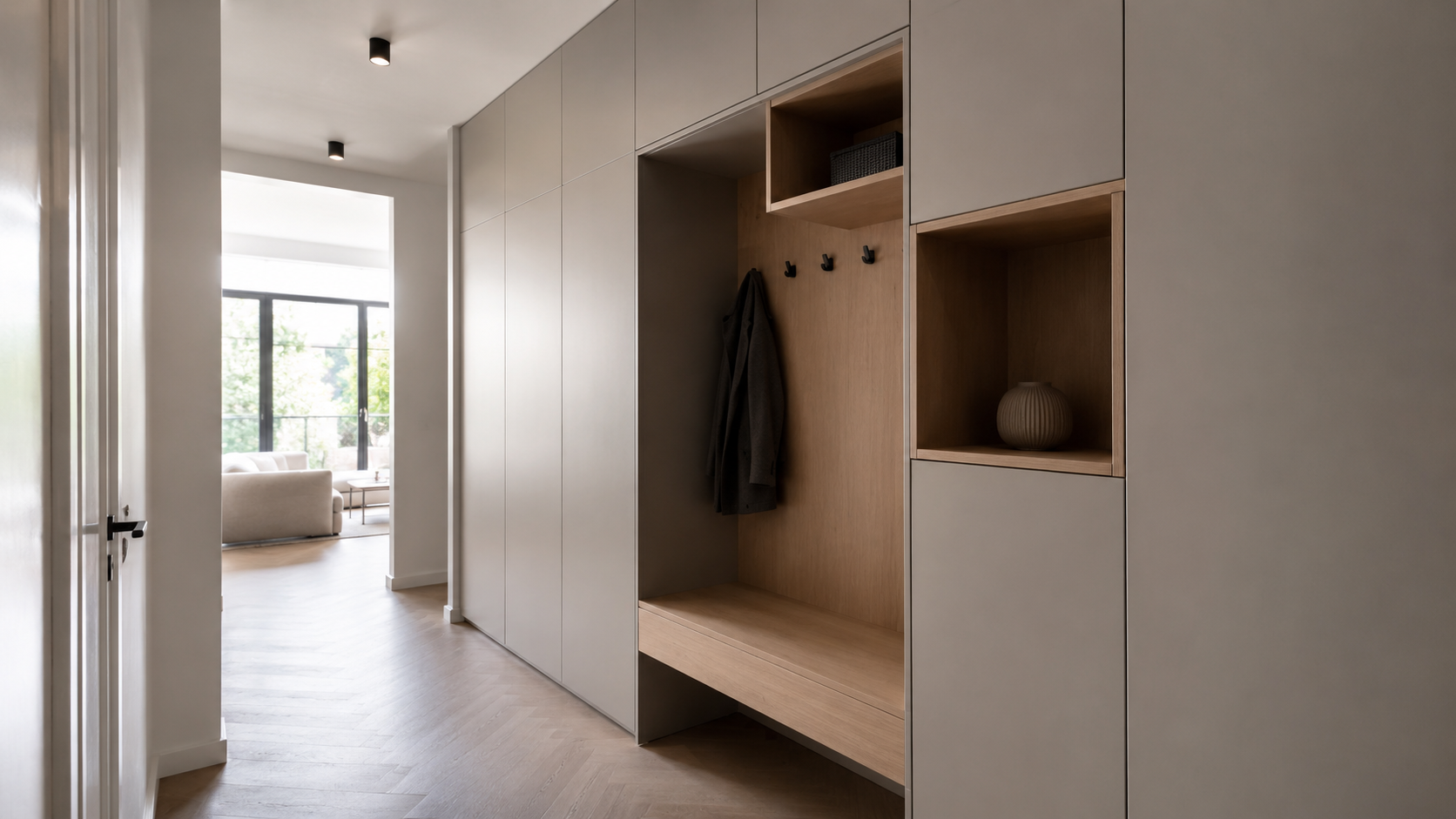
The best mudroom entrance cabinet layout depends on the entry space. A narrow hallway, a back door, a garage entry, and a large foyer all need different planning logic.
Narrow Hallway Mudroom Cabinet
A narrow hallway mudroom cabinet should avoid blocking movement. The cabinet depth, bench projection, and door opening direction all need to be considered carefully.
For narrow spaces, useful ideas include slim shoe cabinets, wall-mounted hooks, a shallow bench, open lower shelves, sliding or handleless cabinet doors, and vertical storage instead of deep storage.
The goal is to create useful storage without making the hallway feel tight. A compact cabinet can still be effective if each zone has a clear purpose.
Back Door or Garage Entry Mudroom
A back door or garage entry mudroom usually handles more practical and less formal storage. This area may receive muddy shoes, wet coats, sports gear, pet items, or cleaning supplies.
For this type of entry, materials and cleaning should be considered early. A cabinet near a garage or back door may need easy-clean surfaces, a durable bench area, and a base design that can handle regular contact with dust or moisture.
Open storage can be useful here, but it should be balanced with closed cabinets to avoid visual clutter.
Large Foyer Storage Wall
A large foyer allows more design flexibility. Instead of only adding a small cabinet, the mudroom storage can become a full storage wall. This may include closed cabinets, display shelves, bench seating, drawers, and decorative details that match the interior style.
For a large foyer, the challenge is not only storage volume. The cabinet should also look balanced with the rest of the home. Door style, color, handles, lighting, and material finish should feel connected to nearby living spaces.
Materials and Finishes for Daily Family Use
A mudroom entrance cabinet is used more frequently than many decorative cabinets in the home. It may be touched by shoes, bags, wet clothing, children’s items, and cleaning tools. For this reason, material and finish choices should be practical.
Scratch-Resistant Cabinet Panels
Cabinet panels in a mudroom should handle daily contact. Bags may rub against doors, shoes may touch lower cabinets, and children may open and close compartments frequently.
Scratch-resistant finishes can help the cabinet maintain a cleaner appearance over time, but no finish should be described as impossible to damage. The right choice depends on project budget, expected use, cleaning habits, and the desired interior style.
Matte finishes, textured wood-look panels, and certain durable laminate-style surfaces are often considered for high-use areas because they can be easier to maintain than very glossy surfaces.
Easy-Clean Bench Surfaces
The bench is one of the most active parts of the mudroom. People sit on it, place bags on it, and sometimes leave damp clothing or outdoor items there. An easy-clean bench surface is therefore important.
A bench surface should be selected with both appearance and maintenance in mind. Wood-look finishes can feel warm and natural, while stone-look or solid-color surfaces may create a cleaner modern look. The final choice should match the home’s style and the expected level of use.
Moisture-Conscious Base Cabinet Design
The lower part of a mudroom cabinet is more likely to meet moisture, dust, or dirt from shoes and outdoor items. This does not mean the cabinet can be treated as a fully wet-area installation, but the base design should still be planned carefully.
Useful details may include slightly raised base construction, easy-clean toe-kick areas, durable lower shelves, materials selected for the actual entry condition, and proper coordination with flooring and wall finishes.
If the entry area is exposed to frequent moisture, the final material and installation method should be confirmed based on project conditions.
Small Details That Improve Everyday Use
A mudroom cabinet becomes more useful when small daily habits are considered early. These details may not be obvious in a simple product image, but they often affect how well the cabinet works after installation.
Ventilated Shoe Compartments
Shoes need storage, but they also need airflow. This is especially important for sports shoes, boots, or shoes used during rainy weather. Ventilated compartments can help keep the cabinet more suitable for daily use.
Ventilation can be planned in subtle ways. Depending on the design style, the cabinet may use open shelves, slatted doors, small gaps, or selected open zones.
Hidden Charging Drawer
Many families leave keys, phones, watches, and small devices near the entrance. A hidden charging drawer can help keep these items organized and reduce cable clutter.
This detail should be planned before production because it may affect drawer structure, power access, and safety coordination. Electrical details should always be confirmed according to local requirements and project conditions.
Kids’ Storage Zones
A family mudroom becomes more practical when children can use it independently. Lower hooks, lower cubbies, and dedicated shoe areas can help children keep their own items organized.
This does not need to make the cabinet look childish. The design can remain clean and modern while still giving children storage at a reachable height.
Space for Umbrellas, Pet Items, or Sports Gear
Many entry problems come from items that do not belong neatly in a standard shoe cabinet. Umbrellas, dog leashes, helmets, reusable bags, and sports equipment often need their own storage.
Before designing the cabinet, it is useful to list these items. Even a narrow vertical compartment or small side cubby can make the mudroom more organized.
Common Mistakes to Avoid When Planning a Mudroom Cabinet
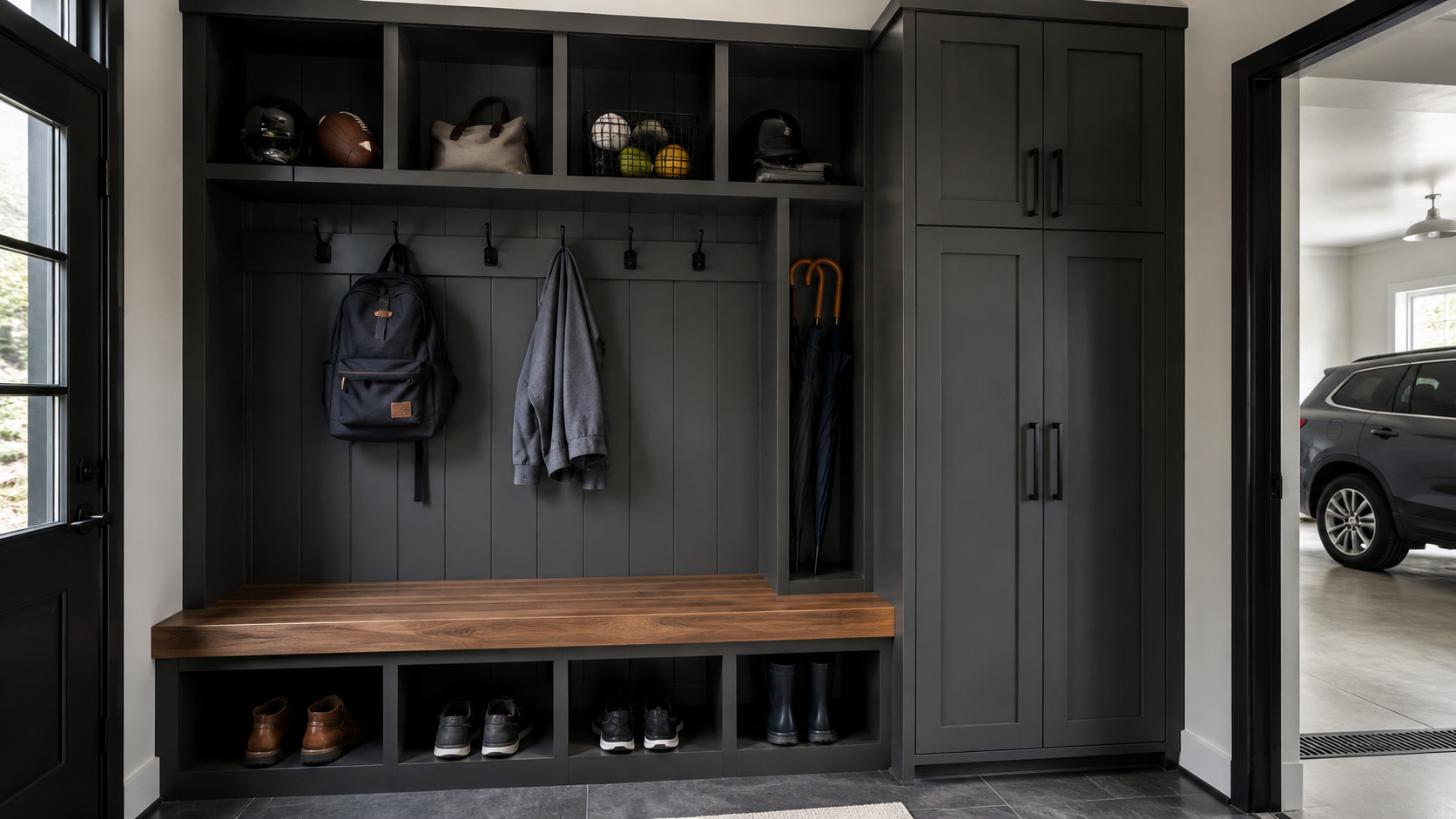
A mudroom cabinet should look good, but appearance should not be the only priority. The following mistakes are common when homeowners focus only on the visual design.
Mistake 1: Making the Bench Too Shallow
A bench that is too shallow may look neat in drawings but feel uncomfortable in real use. The bench should allow a person to sit securely while changing shoes. In very narrow spaces, the bench can be compact, but it still needs to be practical.
Mistake 2: Forgetting Shoe Ventilation
Closed shoe storage can make the entry look clean, but without airflow it may not be ideal for daily footwear. Some open or ventilated storage should be considered, especially for shoes used frequently.
Mistake 3: Using Finishes That Are Difficult to Clean
A finish may look beautiful in a showroom-style image but be difficult to maintain in a busy family entry. Highly delicate surfaces may not be the best option for lower cabinets, benches, or shoe areas.
Mistake 4: Not Planning Enough Vertical Storage
Many mudroom items are tall or awkwardly shaped. Umbrellas, cleaning tools, sports gear, and long coats may need vertical storage. If the cabinet only includes low shelves and small drawers, the family may still run out of useful space.
Mistake 5: Treating Every Entry Space the Same
A garage entry and a formal foyer do not need the same mudroom design. The layout, material, and storage balance should match the way the entry is actually used.
Family Mudroom Cabinet Planning Checklist
Before planning a mudroom entrance cabinet, review the following checklist.
Daily Users
How many people use this entry every day? Do children need lower storage? Does anyone need a more comfortable seating area? These questions help determine how many storage zones the cabinet should include.
Storage Needs
Consider how many pairs of daily shoes need to be stored, whether boots or seasonal shoes are included, and whether coats, bags, umbrellas, or pet items need dedicated space.
It is also helpful to think about cleaning tools, household supplies, and sports equipment. These items often create clutter when they are not planned into the cabinet from the beginning.
Entry Space
The cabinet layout should respond to the actual entry space. A narrow hallway, garage entry, back door, side entrance, and large foyer all need different solutions.
Measure the available wall length, walking path, door swing, nearby switches, vents, windows, and floor transitions before confirming the cabinet structure.
Material and Maintenance
Think about how often the cabinet will be cleaned and what kind of contact it will receive. A mudroom cabinet may face more daily wear than a decorative living room cabinet.
The lower cabinet area, bench surface, shoe shelves, and toe-kick zone should be planned with practical maintenance in mind.
Design Details
Useful design details may include lower hooks for children, ventilated shoe storage, separate cubbies for each family member, a drawer for keys and small items, or a charging area for devices.
These details are easier to include when they are planned early instead of added after the cabinet layout is already fixed.
When a Custom Mudroom Cabinet May Be Useful
A custom mudroom cabinet may be useful when the entry space has specific dimensions or storage needs that standard furniture cannot solve well. For example, a narrow hallway may need a shallow cabinet, while a garage entry may need more durable lower storage. A family with children may need lower hooks and cubbies, while a larger foyer may need a cabinet that also matches the home’s interior style.
Custom planning is not only about making the cabinet larger. It is about making each part of the cabinet match the space, the family’s routine, and the items that need to be stored.
For homeowners comparing different storage options, it is helpful to start with the actual entry routine first. The best cabinet is not always the biggest one. It is the one that makes the entrance easier to use every day.
FAQ
What is a mudroom entrance cabinet?
A mudroom entrance cabinet is a storage system placed near a home entrance, back door, side door, or garage entry. It usually combines shoe storage, hooks, bench seating, cubbies, drawers, and tall cabinets. Its main purpose is to organize outdoor and daily-use items before they enter the main living space.
How deep should a mudroom cabinet be?
The depth should depend on the items being stored and the available entry space. Shoe storage needs enough depth for the household’s largest shoes, while a bench should be deep enough for comfortable sitting. In narrow hallways, a slimmer cabinet may be more practical. Final dimensions should be confirmed based on site measurements and the actual storage plan.
Should a mudroom cabinet include a bench?
A bench is not required in every mudroom, but it is often useful for family homes. It makes changing shoes easier and creates a clear seating area near the entrance. If the space is very narrow, a compact bench or partial bench may be considered instead of a full-width seat.
What materials are best for mudroom cabinets?
There is no single best material for every home. A mudroom cabinet should use finishes that are suitable for daily contact, cleaning, and possible moisture near the floor. Scratch-resistant panels, easy-clean bench surfaces, and moisture-conscious base details are usually worth considering. Final material selection should depend on budget, design style, and project conditions.
Can a mudroom cabinet be designed for a narrow hallway?
Yes. A narrow hallway mudroom cabinet can use slim shoe storage, wall hooks, shallow bench seating, vertical cabinets, or handleless doors to save space. The key is to keep the walking path comfortable and avoid making the entrance feel blocked.
Key Takeaways
A practical mudroom entrance cabinet should be planned around real daily routines, not only appearance. For a family home, the most useful design usually includes shoe storage, a comfortable bench, hooks or cubbies for quick access, and tall storage for larger household items.
The right layout depends on the entry space. A narrow hallway needs a slimmer solution, a garage entry needs more practical storage, and a large foyer may need a cabinet that also supports the home’s interior style.
Materials and finishes should be selected carefully for daily use. Easy-clean surfaces, thoughtful shoe ventilation, and moisture-conscious base details can make the cabinet more practical over time.
Before finalizing the design, it is helpful to list what the family actually stores near the entrance and how each person uses the space. A good mudroom cabinet does not simply add storage. It makes the entry routine clearer, cleaner, and easier to manage every day.
Table of Contents
- What Is a Mudroom Entrance Cabinet?
- What Should a Family Mudroom Cabinet Include?
- Choosing the Right Layout for Your Entry Space
- Materials and Finishes for Daily Family Use
- Small Details That Improve Everyday Use
- Common Mistakes to Avoid When Planning a Mudroom Cabinet
- Family Mudroom Cabinet Planning Checklist
- When a Custom Mudroom Cabinet May Be Useful
- FAQ
- Key Takeaways