 EN
EN

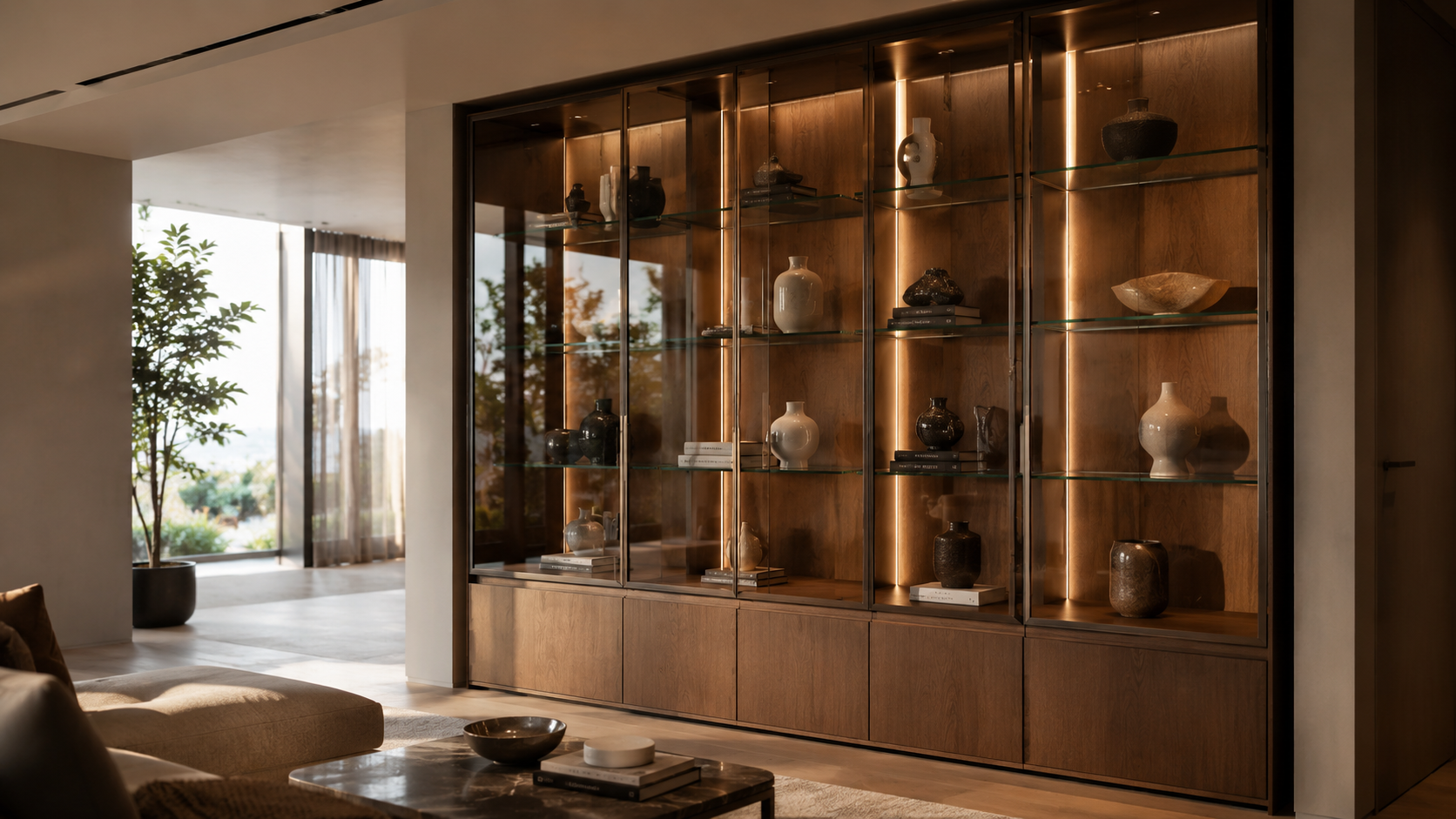
A custom glass display cabinet with LED lighting can change the feeling of a room without making the space feel crowded. It is part storage, part lighting feature, and part interior styling element. In a villa living room, a refined apartment hallway, or a dining area, the right glass cabinet can turn books, ceramics, tableware, art objects, and personal collections into a quiet visual scene.
Unlike ordinary storage cabinets, glass display cabinets need more careful design decisions. The glass should reveal without looking messy. The lighting should create depth without glare. The frame should feel detailed, but not heavy. The objects inside should have enough space to breathe. This is where design becomes a small theater of light, reflection, and restraint.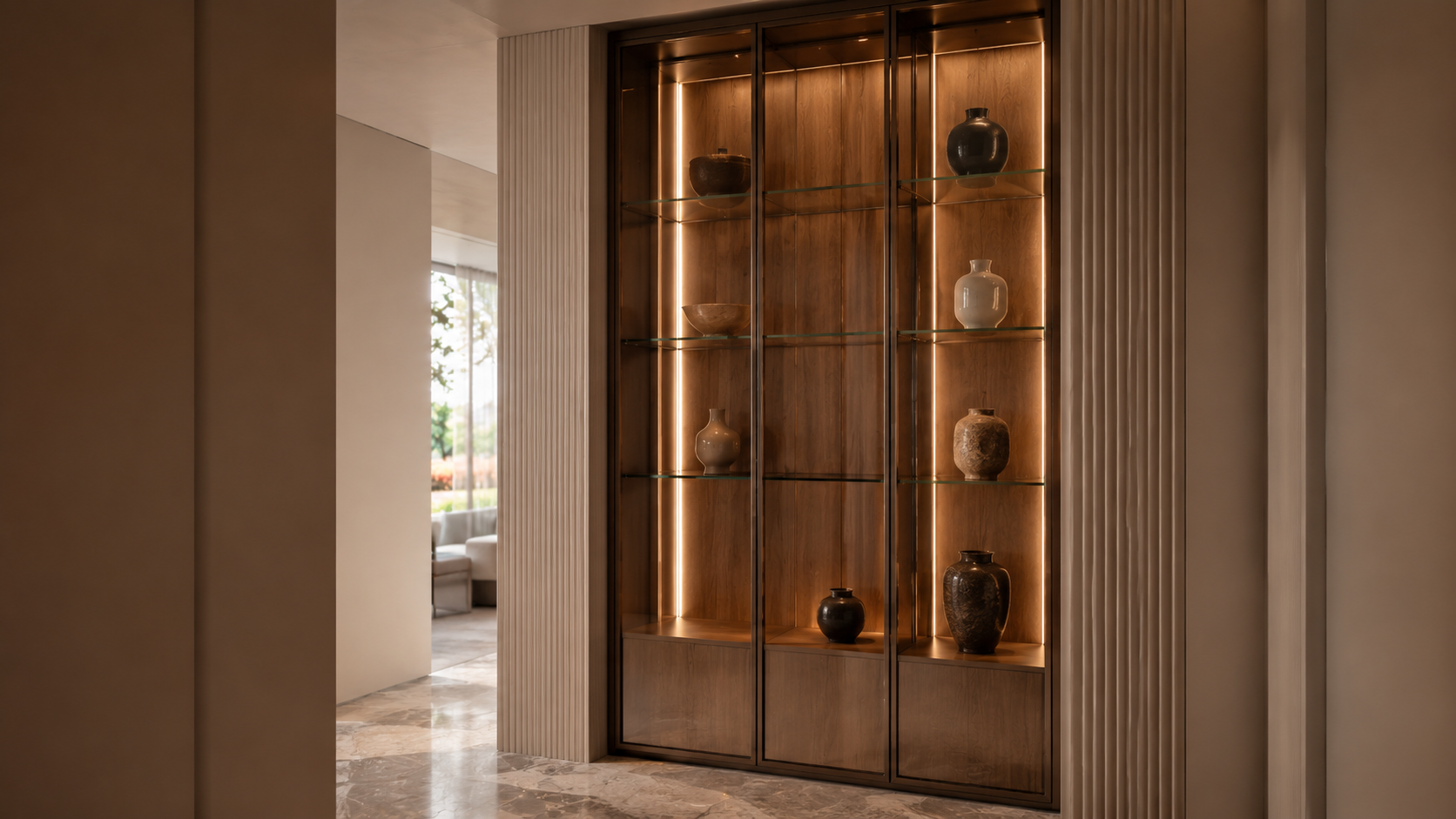
Glass Cabinets as Interior Focal Points
A glass display cabinet works best when it has a clear role in the room. It should not feel like a transparent version of a normal storage cabinet. The purpose is not to show everything. The purpose is to show the right things, in the right amount, under the right light.
In a living room, a glass cabinet can frame the sofa area or balance a TV wall. In a hallway, it can create a softer arrival moment near the entrance. In a dining room, it can display tableware, glassware, vases, or decorative objects in a more elegant way than open shelving.
The strongest designs usually share three qualities:
- The cabinet has a clear vertical or horizontal rhythm.
- The lighting feels soft rather than commercial.
- The items inside are edited, not crowded.
A cabinet filled from edge to edge often loses its luxury feeling. Negative space is part of the design. A few carefully placed objects can feel more refined than a full shelf of unrelated items.
Living Room Display Wall Ideas
The living room is one of the most natural places for a glass display cabinet. It is usually the social center of the home, so the display should feel calm and intentional. A full-height glass cabinet wall can work beautifully when the room has enough width and ceiling height. It gives the space a built-in, architectural feeling instead of looking like a loose furniture piece.
For luxury villas and large apartments, the cabinet can be designed as a complete wall composition. Some sections may use glass doors and LED lighting, while lower sections can use closed cabinet doors for practical storage. This keeps the visual area elegant while hiding items that do not need to be displayed.
A living room glass cabinet should also respect the other major elements in the room. If there is a TV wall, fireplace, stone feature wall, or large artwork, the glass cabinet should not compete too loudly. Slim frames, warm lighting, and a limited material palette help the display feel integrated.
A useful approach is to treat the cabinet as part of the whole-house cabinetry language. If the kitchen, sideboard, wardrobe, and TV cabinet already use warm wood veneer, champagne metal, or soft neutral tones, the glass cabinet can borrow these details to create continuity.
Hallway and Foyer Cabinets with a Softer Glow
A hallway or foyer display cabinet is less about storage volume and more about atmosphere. It shapes the first impression of the home. In this position, the cabinet should feel polished, but not too bright. A soft glow behind smoked glass or fluted glass can create a welcoming effect without making the entrance look like a showroom.
For narrow hallways, depth is important. A cabinet that is too deep may interrupt movement. A shallower display cabinet with vertical LED strips and carefully spaced shelves can still feel elegant. In some projects, only one or two glass sections are enough. The rest can be finished with wood veneer panels, wall cladding, or closed cabinet doors.
Smoked glass is especially useful in entrance areas because it softens the view of the objects inside. It reduces visual clutter and gives the cabinet a quieter look. However, it also makes the contents less visible than clear glass, so the lighting and object selection need to be planned carefully.
Dining Room Glass Cabinets for Tableware and Decor
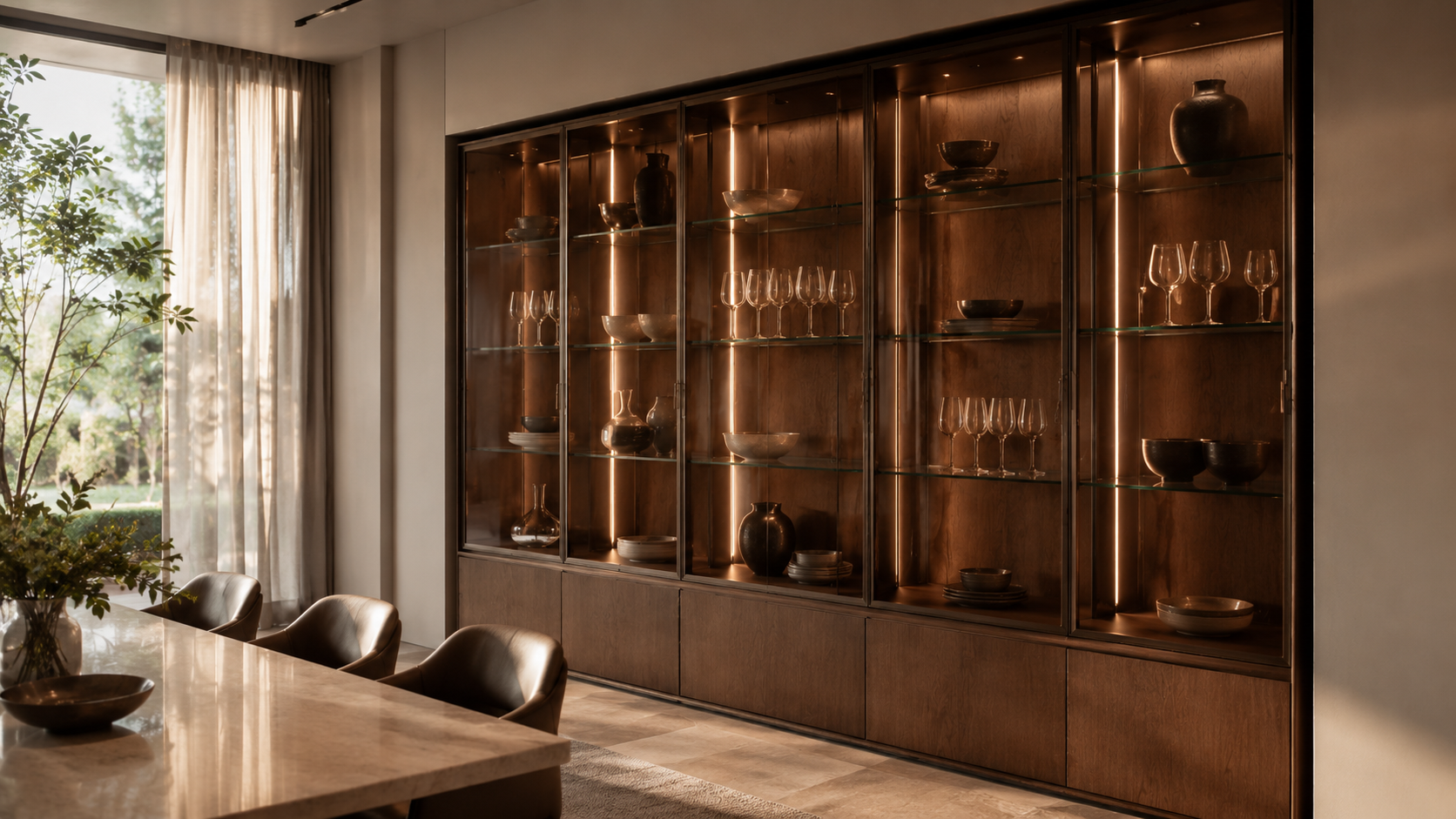
In a dining room, a glass display cabinet can feel both decorative and useful. It may hold tableware, wine glasses, ceramics, serving trays, or sculptural objects. Compared with open shelves, glass doors help protect items from dust while still keeping them visible.
A dining room glass cabinet often works well when combined with a sideboard cabinet. The upper part can use clear or smoked glass with LED lighting, while the lower part can use closed storage for less decorative items. This creates a practical rhythm: display above, storage below.
The design should match the dining table, wall finish, and lighting fixture. If the dining room uses a marble or sintered stone table, a stone-effect cabinet back panel can create a strong visual connection. If the dining room is warmer and more residential, wood veneer and warm LED lighting may feel more comfortable.
Glass shelves can make the cabinet feel lighter, especially when lighting passes through them. However, shelf thickness and support details should be considered based on the objects being displayed. Heavy tableware may require a different shelf structure from small decorative pieces.
Smoked Glass for a Calmer Luxury Look
Smoked glass has become popular in modern luxury interiors because it creates mystery without fully hiding the cabinet interior. It softens reflections, reduces sharp contrast, and gives the display a calmer mood. Under warm LED lighting, smoked glass can make ceramics, glassware, books, and art objects look more layered.
But smoked glass is not always the better choice. If the goal is maximum visibility, clear glass may be more suitable. If the cabinet will display colorful objects or delicate collections, smoked glass may reduce some of their detail. The right choice depends on the room lighting, the cabinet depth, and the kind of objects being displayed.
A good design method is to ask one question: should the cabinet reveal the objects clearly, or should it create a softer background mood?
For villas and high-end apartments, smoked glass often works well in living rooms, dining rooms, wine areas, and hallways. It pairs beautifully with dark wood veneer, bronze metal, champagne accents, stone textures, and leather-effect back panels.
Fluted Glass for Texture and Partial Privacy
Fluted glass brings texture into the cabinet design. Its vertical lines blur the objects behind the door, creating a softer and more decorative surface. This makes it useful when the cabinet needs to feel refined even when the items inside are not perfectly arranged.
In a foyer, fluted glass can make a cabinet feel lighter than solid doors but more private than clear glass. In a dining room, it can soften the look of tableware and glassware. In a living room, it can add vertical rhythm, especially when paired with slim metal frames.
The tradeoff is visibility. Fluted glass is not ideal when every object needs to be clearly seen. It works better when the goal is mood, texture, and partial concealment.
From a styling perspective, fluted glass looks especially elegant with:
- Warm white or beige interiors
- Light wood veneer
- Champagne or bronze metal frames
- Soft LED lighting
- Stone, leather-effect, or neutral back panels
It is a quiet material, but not a plain one. It adds visual movement without demanding too much attention.
Metal Frames and Refined Cabinet Details
The frame of a glass display cabinet is like the linework in an interior sketch. It decides whether the cabinet feels sharp, soft, classic, or contemporary. A black metal frame can look modern and architectural. Champagne or bronze finishes feel warmer and often suit luxury residential interiors. Brushed metal can add detail without looking too glossy.
For high-end homes, slim frames usually feel more refined than heavy frames. They allow the glass, lighting, and displayed objects to remain the main focus. However, frame thickness should still be coordinated with the cabinet height, door size, hinge system, and overall structure. A very tall glass door may need a frame proportion that feels visually light but structurally appropriate.
Small details matter:
- Door gaps should look clean and consistent.
- Handles should not interrupt the glass too aggressively.
- Hinges and hardware should match the intended level of refinement.
- Lighting wires and drivers should be hidden as much as possible.
- The frame finish should coordinate with nearby handles, lighting fixtures, or furniture legs.
These details are easy to overlook in early design sketches, but they strongly affect the final feeling of the cabinet.
Material Palettes for Villas and Apartments
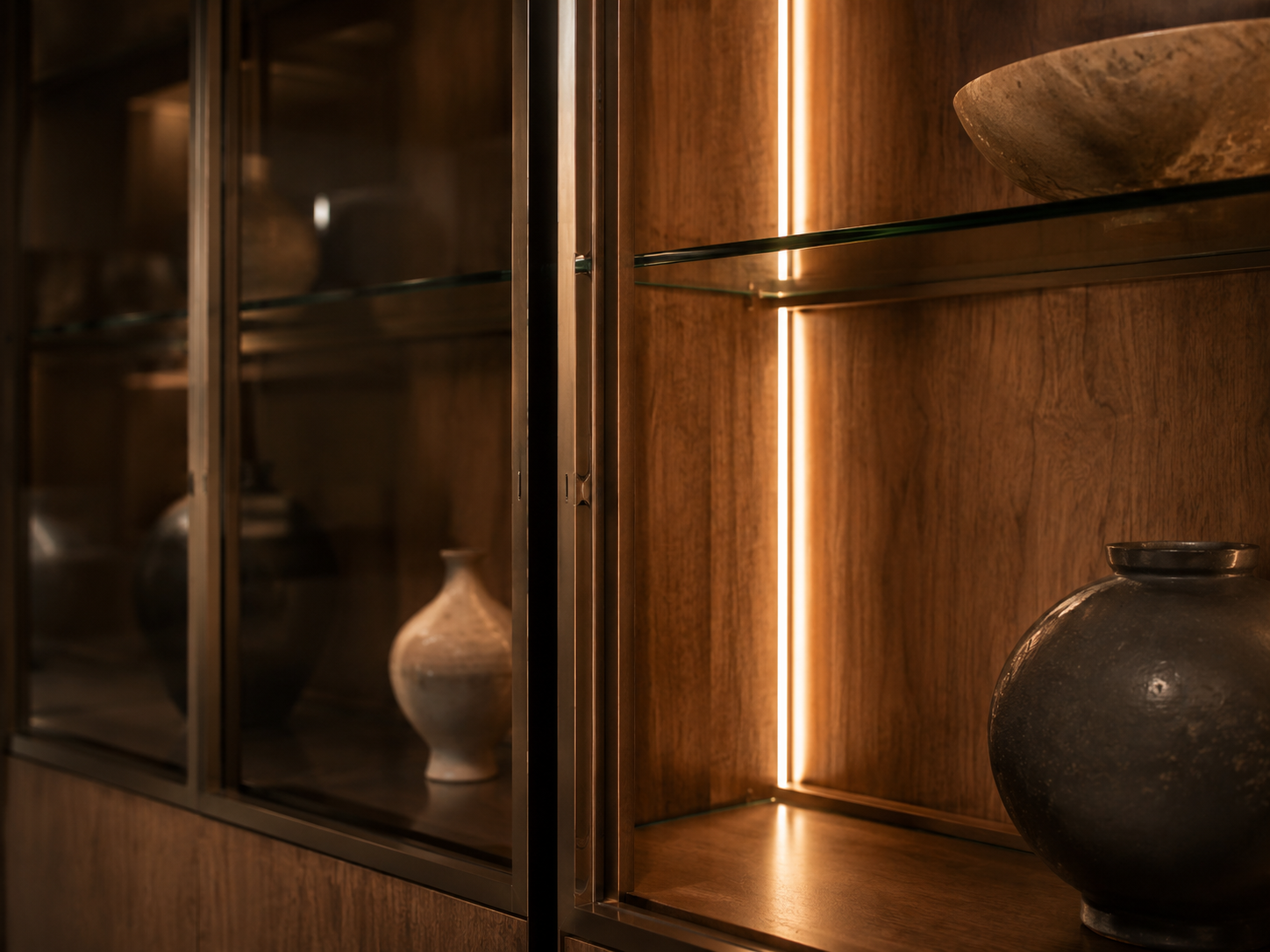
A glass cabinet becomes more beautiful when it belongs to a clear material palette. The glass, frame, cabinet body, shelves, back panel, and lighting should not feel like separate decisions. They should feel composed.
For a warm modern villa, a good palette might include smoked glass, walnut wood veneer, bronze metal frames, and warm LED lighting. For a bright apartment, clear glass, light oak veneer, champagne metal, and a soft beige back panel can feel clean and airy. For a more dramatic living room, smoked glass with a stone-effect back panel can create stronger contrast.
Here are a few refined combinations:
| Design Mood | Glass Type | Frame Finish | Cabinet Body | Back Panel |
|---|---|---|---|---|
| Warm Modern | Smoked glass | Bronze metal | Walnut veneer | Leather-effect panel |
| Light Luxury | Clear glass | Champagne metal | Light oak veneer | Beige matte panel |
| Soft Minimal | Fluted glass | Slim black metal | Warm white lacquer | Neutral wall panel |
| Dramatic Villa | Smoked glass | Dark bronze metal | Dark wood veneer | Stone-effect panel |
The right palette should be selected based on the room, not just the cabinet. A beautiful cabinet can still feel wrong if it does not match the flooring, wall tone, ceiling lighting, or nearby furniture.
Styling Objects Inside the Cabinet
The inside of the cabinet needs design too. A glass cabinet can quickly lose its elegance if the shelves are overloaded. The best displays often feel edited, with a rhythm of height, shape, color, and empty space.
For living rooms, books can be placed horizontally and vertically to create structure. Ceramics, sculptures, framed objects, and small art pieces can be used as accents. For dining rooms, tableware and glassware should be grouped with enough space between them. For hallways, fewer objects usually work better.
A simple styling rule is to avoid making every shelf equally full. Some shelves can hold larger objects. Some can hold smaller pairs. Some can remain partly empty. LED lighting will make every object more visible, so visual clutter becomes more noticeable.
The cabinet should also be easy to maintain. Highly reflective glass shows fingerprints more easily. Dark glass can hide some visual clutter, but it may still show dust under lighting. Display items that are frequently used should be placed where they are easy to reach, while fragile or decorative pieces can be placed higher.
This is where beauty and practicality need a handshake rather than a wrestling match.
Design Takeaways
A custom glass display cabinet with LED lighting should feel intentional, not simply bright. The strongest designs are usually quiet, layered, and well edited. Glass gives visibility. LED lighting gives depth. Metal frames give structure. Wood, stone, or leather-effect panels give warmth and contrast.
Before designing one, consider these points:
- Where will the cabinet be seen from most often?
- Should the objects be clearly visible or softly hidden?
- Is clear glass, smoked glass, or fluted glass more suitable?
- Will the LED lighting create warmth or glare?
- Does the cabinet need closed lower storage?
- Are the shelves flexible enough for future display changes?
- Do the frame, back panel, and cabinet body match the rest of the home?
- Can wiring, drivers, and hardware be kept visually clean?
A beautiful display cabinet does not need to shout. It only needs to hold light well, frame objects with care, and leave enough silence between each detail.
Editorial Closing
A glass display cabinet is not only about what it holds. It is about how a room chooses to reveal its details. Clear glass feels open and direct. Smoked glass feels calm and atmospheric. Fluted glass adds texture and softness. LED lighting gives the cabinet a quiet inner glow, turning ordinary shelves into a small architectural feature.
For luxury homes, villas, and refined apartments, the most memorable glass cabinets are rarely the loudest ones. They are the ones that understand proportion, restraint, material harmony, and the beauty of leaving space unfilled.