 EN
EN

Introduction
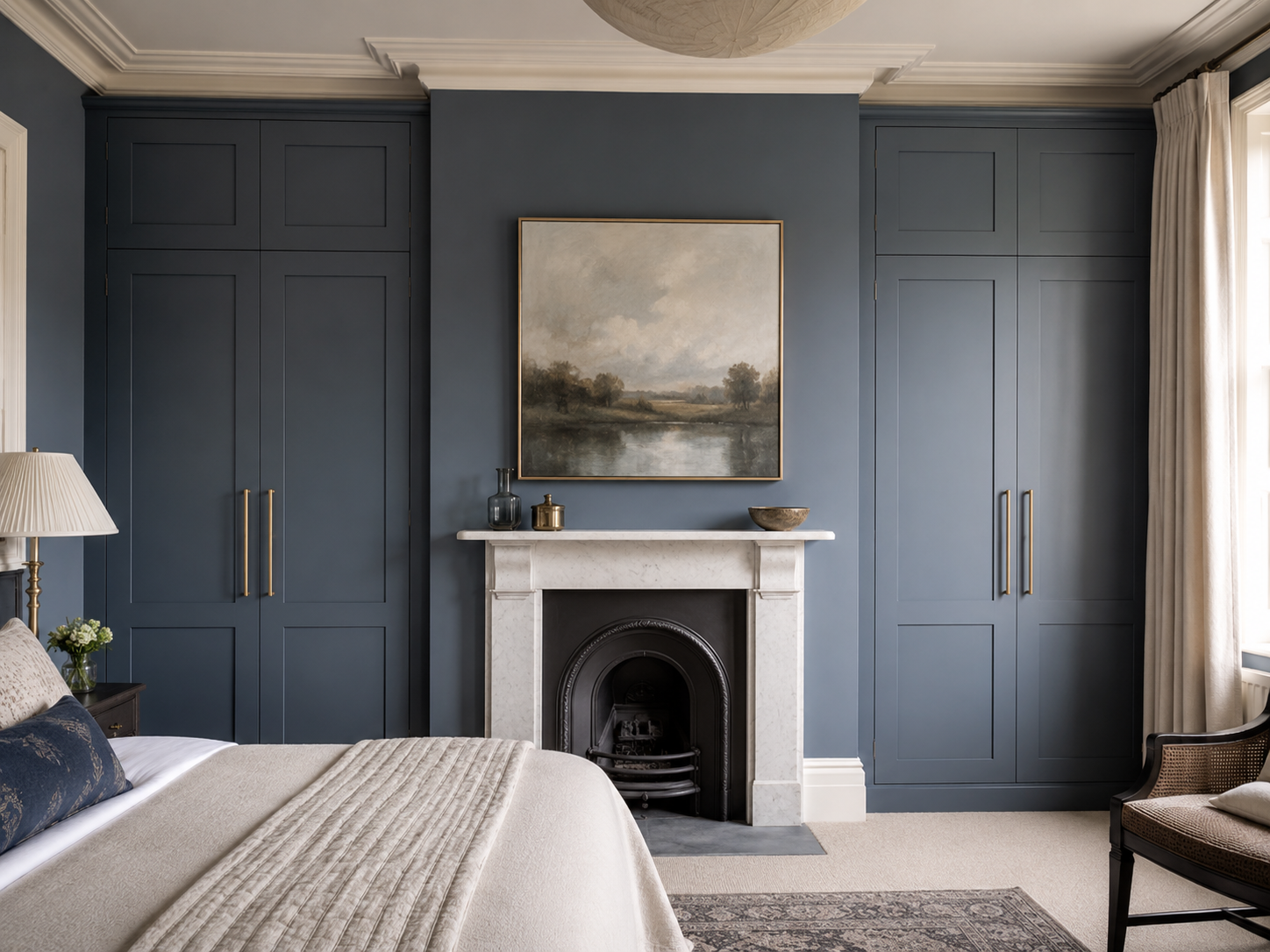
In many UK homes, bedrooms are not perfectly rectangular. Period houses, terraced homes, converted flats, and renovated apartments often include chimney breasts, uneven wall recesses, sloped ceilings, boxed-in pipes, or narrow alcove spaces on either side of a wall feature. These areas can be difficult to furnish with standard wardrobes, yet they are often exactly where valuable storage is needed.
This is where bespoke fitted wardrobes for alcove bedrooms become a practical and elegant solution. Instead of placing a freestanding wardrobe against a wall and accepting gaps at the sides or wasted space above, a made-to-measure wardrobe can be designed to fit the alcove width, ceiling height, wall depth, and storage needs of the room.
For homeowners, designers, developers, and contractors, alcove wardrobes are not only about adding storage. They are also about making the bedroom feel calmer, more architectural, and more complete. At Sunrise Furnishing, we focus on custom cabinet manufacturing for residential, villa, apartment, hotel, and project interiors, helping clients create wardrobe systems that match the space rather than forcing the space to fit the furniture.
What Is an Alcove Wardrobe?
An alcove wardrobe is a fitted wardrobe designed to sit inside a recessed wall area, commonly found beside a chimney breast, between two walls, under a sloped ceiling, or within an awkward bedroom corner. Unlike a standard wardrobe that comes in fixed sizes, an alcove wardrobe is usually planned according to the exact dimensions of the room.
Using Awkward Bedroom Recesses
Bedroom alcoves are often underused because they are too narrow, too deep, or too irregular for ordinary furniture. A standard cabinet may be too wide, while open shelves may not provide enough hidden storage for clothing, bedding, shoes, and accessories.
A bespoke fitted wardrobe can turn this difficult area into practical floor-to-ceiling storage. The design can follow the shape of the wall, hide uneven corners, and create a clean built-in look. For small UK bedrooms, this is especially useful because every centimetre of wall space matters.
Why Freestanding Furniture Often Fails
Freestanding wardrobes are easy to buy, but they are rarely ideal for alcove bedrooms. They often leave visible gaps at the top, sides, or back. These gaps collect dust, waste space, and make the room look less refined. In older properties, walls may not be perfectly straight, which can make a standard wardrobe look slightly misaligned.
Another common issue is height. Many freestanding wardrobes stop well below the ceiling, leaving unused vertical space. In compact bedrooms, that upper area could be used for seasonal clothing, spare bedding, luggage, or less frequently used items.
How Bespoke Wardrobes Fit Wall-to-Wall
A bespoke alcove wardrobe is designed around the room. The cabinet width, height, depth, door proportions, internal sections, and finishing details can all be adjusted. This allows the wardrobe to fit wall-to-wall, floor-to-ceiling, or around architectural features.
For a more seamless result, details such as fillers, side panels, plinths, cornices, and shadow gaps should be planned carefully. These small elements help the wardrobe look integrated with the bedroom, rather than simply placed inside it.
Best Internal Layouts for Fitted Wardrobes
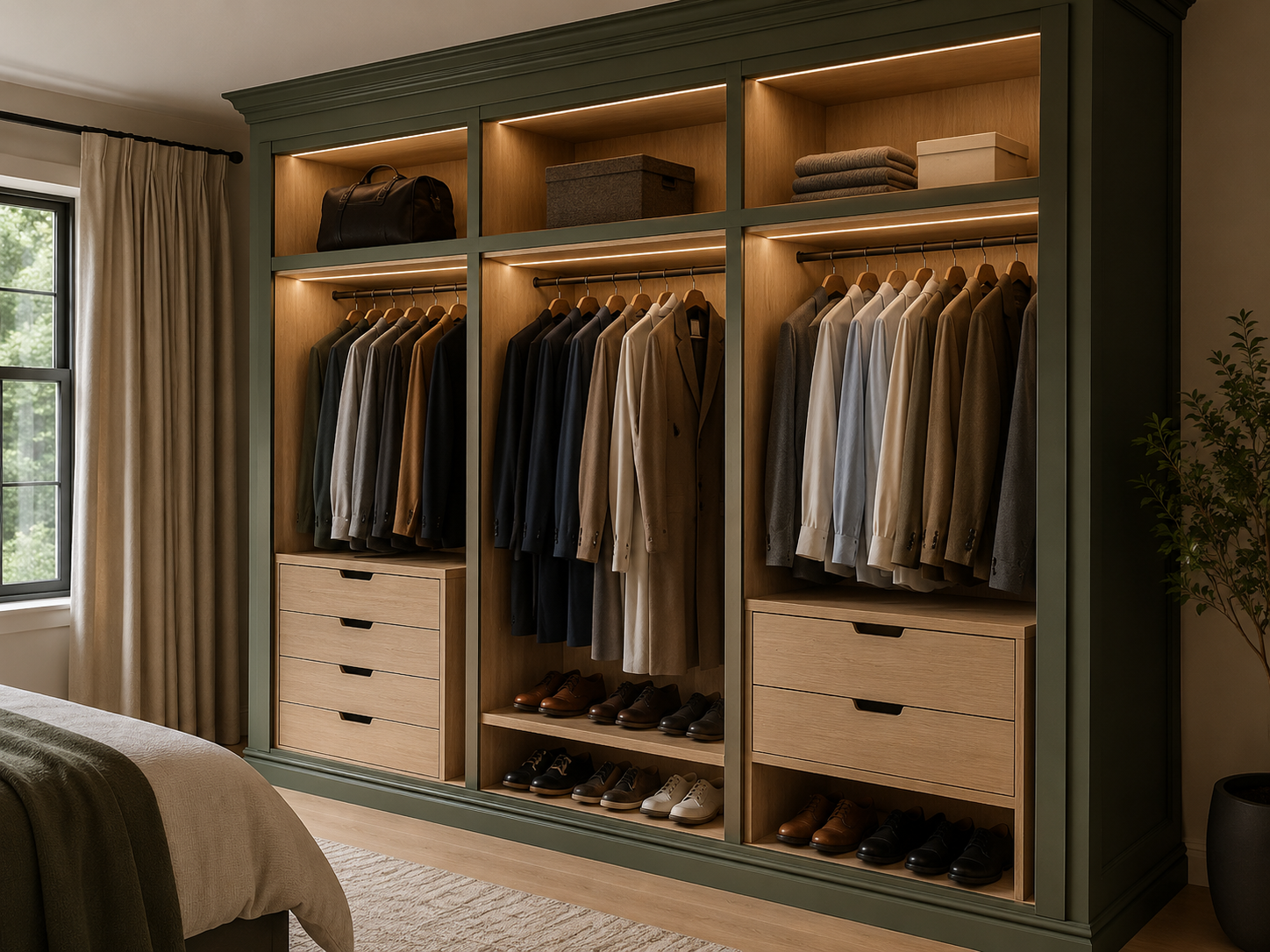
A beautiful exterior is important, but the real value of a fitted wardrobe comes from the internal layout. Before choosing door colour or handle style, homeowners should first think about what needs to be stored and how often each item is used.
Long Hanging and Short Hanging Zones
A well-planned wardrobe should include different hanging zones. Long hanging space is useful for coats, dresses, long cardigans, suits, and formal wear. Short hanging space works well for shirts, jackets, trousers, skirts, and daily outfits.
In many alcove wardrobes, a combination of long and short hanging sections is more practical than one full-width hanging rail. For example, one side of the wardrobe can be used for longer garments, while the other side can include double hanging rails to increase daily clothing storage.
For couples sharing a bedroom wardrobe, the internal layout can be divided into two personal zones. This makes the wardrobe easier to use and avoids mixing different clothing types together.
Drawers for Accessories
Drawers are especially useful in fitted wardrobes because they keep small items organised and hidden. They can be used for underwear, socks, scarves, belts, watches, jewellery, folded T-shirts, or daily accessories.
For a high-end wardrobe, drawer design should not be an afterthought. The drawer height, depth, handle style, soft-close runners, and internal dividers all affect the user experience. Shallow drawers are better for accessories, while deeper drawers are more suitable for knitwear or larger folded items.
If the wardrobe is placed in a narrow alcove, internal drawers should be checked carefully against door opening angles. A drawer that looks good on a drawing may become inconvenient if a hinged door cannot open wide enough.
Shoe Shelves and Seasonal Storage
Many homeowners underestimate shoe storage when planning a bedroom wardrobe. Adjustable shelves are usually more flexible than fixed shelves because different shoes require different heights. Trainers, boots, heels, and formal shoes all need slightly different spacing.
The upper section of a floor-to-ceiling wardrobe can be designed for seasonal storage. This area is ideal for winter bedding, travel bags, spare pillows, coats, or items that are not used every day. For very tall wardrobes, a pull-down rail or clearly divided upper cabinet can make the space more practical.
Lighting can also improve the internal layout. Soft LED strips or sensor lights make it easier to see clothing in deep alcoves, especially in bedrooms with limited natural light.
Door Styles for Alcove Bedrooms
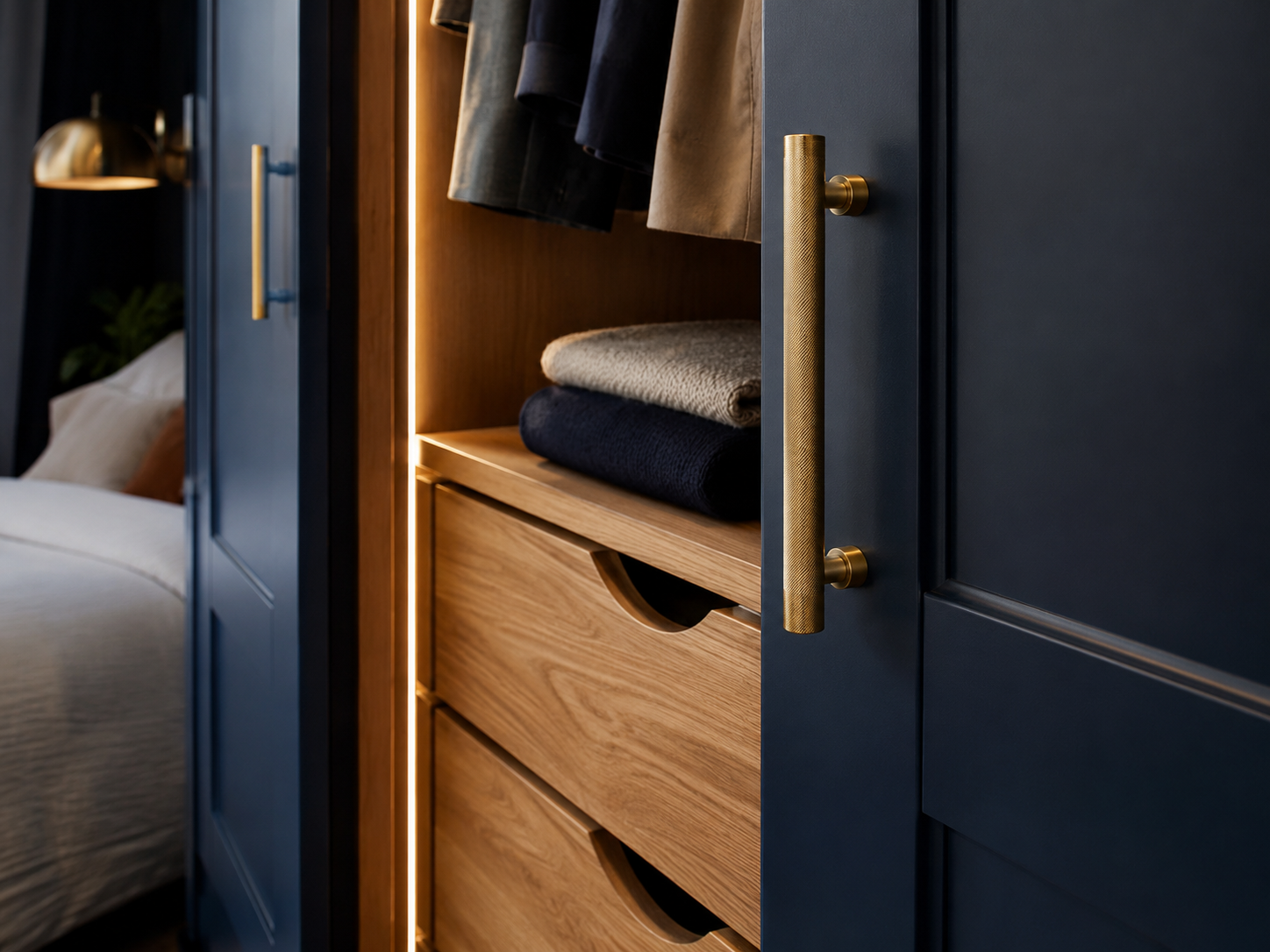
Wardrobe door style affects both appearance and daily use. In an alcove bedroom, the best choice depends on the available walking space, bed position, room size, and the overall interior style.
Hinged Wardrobe Doors
Hinged doors are a classic choice for fitted wardrobes. They provide full access to the interior and work well in traditional, transitional, and modern bedrooms. They are also suitable for shaker-style doors, painted classic panels, slim framed doors, and handle-led designs.
The main consideration is clearance. If the bed is very close to the wardrobe, hinged doors may feel tight. In that case, narrower door leaves or a mixed door design may be needed. For wider alcoves, hinged doors can create a refined and balanced look.
Sliding Wardrobe Doors
Sliding wardrobe doors are practical for compact bedrooms because they do not swing out into the room. This makes them useful where the space between the bed and wardrobe is limited.
However, sliding doors usually allow access to only part of the wardrobe at one time. The track system also needs careful planning, especially if the wardrobe is shallow. For a premium result, the sliding mechanism should feel smooth, quiet, and stable, not heavy or loose.
Sliding doors can work well with large panels, matte finishes, wood grain surfaces, or mirror panels. They are often suitable for contemporary UK flats, rental apartments, and bedrooms where a clean modern look is preferred.
Mirror or Glass Wardrobe Doors
Mirror wardrobe doors can make a small bedroom feel brighter and larger. They reflect natural light and reduce the need for a separate standing mirror. This is especially useful in compact city apartments or rooms with limited wall space.
Glass wardrobe doors create a more boutique-style look. Clear glass, tinted glass, fluted glass, or framed glass doors can make the wardrobe feel lighter and more decorative. However, glass doors also require more careful internal organisation because the contents may be partly visible.
For a softer look, homeowners can choose a combination of solid doors and mirror or glass panels. This gives the room visual interest without making the wardrobe feel too exposed.
Finishes for UK Homes and Apartments
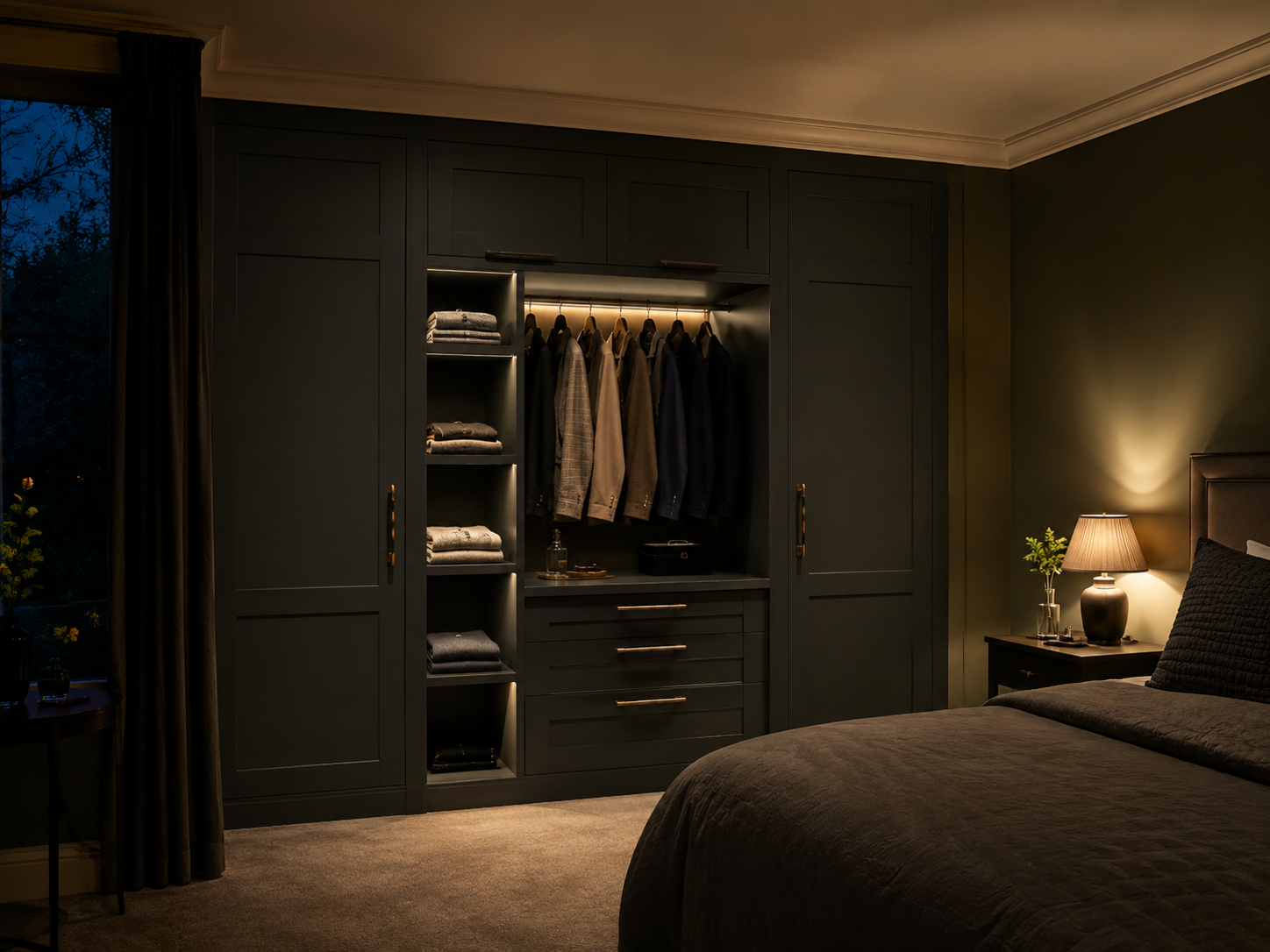
The finish of an alcove wardrobe should match the bedroom style, property type, and long-term maintenance needs. A good finish does not simply look attractive in photos; it should also feel appropriate for the home and remain easy to live with.
Painted Classic Doors
Painted doors are popular in UK interiors because they suit both period homes and modern renovations. Soft white, warm grey, taupe, sage, cream, and muted beige tones can create a calm bedroom atmosphere.
Classic painted doors can be designed with shaker frames, slim mouldings, or more minimal recessed panels. For houses with fireplaces, cornices, skirting boards, or traditional details, painted fitted wardrobes can feel naturally integrated with the architecture.
Wood Grain Finishes
Wood grain finishes add warmth and texture. They are suitable for bedrooms that need a softer, more natural feeling. Light oak, walnut, ash, and smoked wood tones can work well depending on the floor, wall colour, and lighting.
For small alcove wardrobes, a full dark wood finish may feel heavy, so it is often better to use wood grain as an accent. For example, the exterior doors can be painted in a soft neutral tone, while the internal carcass or open niche uses a warm wood grain finish.
Matte Modern Finishes
Matte finishes are ideal for modern apartments, minimalist bedrooms, and contemporary villa projects. They reduce glare and create a calm, refined surface. A matte wardrobe can look especially elegant when combined with slim handles, recessed pulls, or handleless door profiles.
For high-end projects, finish selection should consider colour consistency, edge detailing, panel durability, and how the surface reacts to fingerprints. These details are important because wardrobe doors are touched every day.
How to Plan a Bespoke Wardrobe Order
A successful wardrobe order starts with clear information. The more accurate the early planning, the easier it is to produce a wardrobe that fits the room and meets the storage needs.
Measure the Alcove Width and Height
The first step is to measure the alcove width, height, and depth. Because walls and ceilings may not be perfectly straight, it is useful to measure at several points rather than relying on one number.
For example, measure the width at the top, middle, and bottom of the alcove. Measure the height on the left and right sides. If there are skirting boards, sockets, radiators, beams, sloped ceilings, or pipe boxes, these should also be noted.
Photos are just as important as dimensions. A clear front view, side view, ceiling view, and nearby wall detail can help the manufacturer understand the actual conditions of the room.
Confirm Storage Needs
Before asking for a quotation, make a simple list of what the wardrobe needs to store. This could include long coats, dresses, suits, folded clothes, shoes, bags, bedding, accessories, luggage, or children’s clothing.
It is also helpful to decide whether the wardrobe is mainly for daily use, guest bedroom storage, rental apartment storage, or a master bedroom suite. Different uses require different internal layouts.
For example, a guest bedroom may need more flexible shelving and luggage space, while a master bedroom may need more drawers, lighting, hanging rails, and personal storage zones.
Choose Door Style and Finish
Once the layout is clear, the door style and finish can be selected. This is where design and function come together. The door style should match the available space, while the finish should match the room’s interior direction.
For large projects, such as apartments, hotels, or residential developments, it is useful to create a consistent finish schedule. This helps wardrobes, entrance cabinets, bathroom vanities, kitchen cabinets, and other custom cabinets feel connected throughout the property.
Practical Tips for Better Alcove Wardrobe Design
A good alcove wardrobe should look built-in, but it should also be easy to use every day. These practical details can make a big difference.
First, do not fill every section with the same storage type. A wardrobe with only hanging rails may waste space, while a wardrobe with too many shelves may be difficult to use for clothing. A balanced layout normally includes hanging, drawers, shelves, and upper storage.
Second, consider the door swing before confirming drawers. Internal drawers need enough opening space. If the bedroom is narrow, sliding doors or narrower hinged doors may work better.
Third, plan lighting early. LED strips, sensor lights, or soft internal lighting should be considered before production, because wiring routes, grooves, and transformer positions may need to be prepared.
Fourth, keep the exterior calm. In a bedroom, the wardrobe is often one of the largest visual surfaces. Too many colours, handles, or decorative elements can make the space feel busy. A clean finish with refined details usually feels more premium.
Common Mistakes to Avoid
One common mistake is choosing the door style before planning the internal storage. The wardrobe may look good from the outside, but if the hanging zones, drawers, and shelves are not practical, the user experience will be poor.
Another mistake is ignoring wall irregularities. Alcoves in older UK homes may not be perfectly square. If this is not considered, the wardrobe may require awkward on-site adjustments or leave uneven gaps.
A third mistake is making the wardrobe too deep or too shallow without checking clothing dimensions. A shallow wardrobe may not hold hangers properly, while an overly deep wardrobe can make shelves hard to access.
Many homeowners also forget about skirting boards, sockets, switches, and radiators. These details may seem small, but they can affect cabinet depth, side fillers, back panels, and installation planning.
Finally, avoid selecting a finish based only on a showroom sample or online image. The same colour can look different depending on natural light, wall paint, flooring, and room size.
Custom Manufacturing Suggestions
For overseas homeowners, designers, builders, and project contractors, bespoke wardrobe manufacturing should be handled with clear drawings and specifications. A reliable wardrobe order should include cabinet dimensions, panel materials, door design, internal layout, hardware details, finish codes, packing requirements, and installation references.
For alcove wardrobes, production accuracy is especially important because the cabinet must fit into a defined space. Shop drawings should show the full elevation, section depth, internal divisions, door opening method, fillers, side panels, and top details.
Sunrise Furnishing works as a custom cabinet manufacturer, not a standard furniture retailer. This means the wardrobe can be developed according to the project’s measurements, style direction, material requirements, and storage needs. For villa projects, apartment developments, hotel rooms, and residential renovations, custom production allows wardrobes to coordinate with other cabinet systems in the same property.
FAQ
What does bespoke fitted wardrobe mean?
A bespoke fitted wardrobe is a wardrobe made to fit a specific room, wall, alcove, or storage requirement. Unlike a freestanding wardrobe, it can be designed to match the exact width, height, depth, internal layout, door style, and finish of the bedroom.
Are alcove wardrobes good for small bedrooms?
Yes. Alcove wardrobes are especially useful for small bedrooms because they turn unused wall recesses into practical storage. A floor-to-ceiling design can use vertical space efficiently and reduce the need for extra freestanding furniture.
Should alcove wardrobes use sliding or hinged doors?
Hinged doors are suitable when there is enough space in front of the wardrobe and full internal access is preferred. Sliding doors are better for narrow bedrooms where the bed is close to the wardrobe. The best choice depends on room layout, wardrobe depth, and daily use habits.
Can fitted wardrobes be made floor-to-ceiling?
Yes. Floor-to-ceiling fitted wardrobes are a common solution for alcove bedrooms. They help maximise storage height and create a cleaner built-in appearance. Upper sections can be used for seasonal clothing, bedding, luggage, or less frequently used items.
What information is needed for a wardrobe quotation?
For a bespoke wardrobe quotation, it is helpful to provide alcove width, height, depth, ceiling height, room photos, preferred door style, finish direction, storage needs, and any details such as sockets, skirting boards, radiators, or sloped ceilings.
CTA
If you are planning bespoke fitted wardrobes for an alcove bedroom, send us your room photos, alcove measurements, ceiling height, and storage requirements. Sunrise Furnishing can help you develop a made-to-measure wardrobe solution for private homes, apartments, villas, hotels, and residential projects.
Table of Contents
- Introduction
- What Is an Alcove Wardrobe?
- Best Internal Layouts for Fitted Wardrobes
- Door Styles for Alcove Bedrooms
- Finishes for UK Homes and Apartments
- How to Plan a Bespoke Wardrobe Order
- Practical Tips for Better Alcove Wardrobe Design
- Common Mistakes to Avoid
- Custom Manufacturing Suggestions
- FAQ
- CTA